
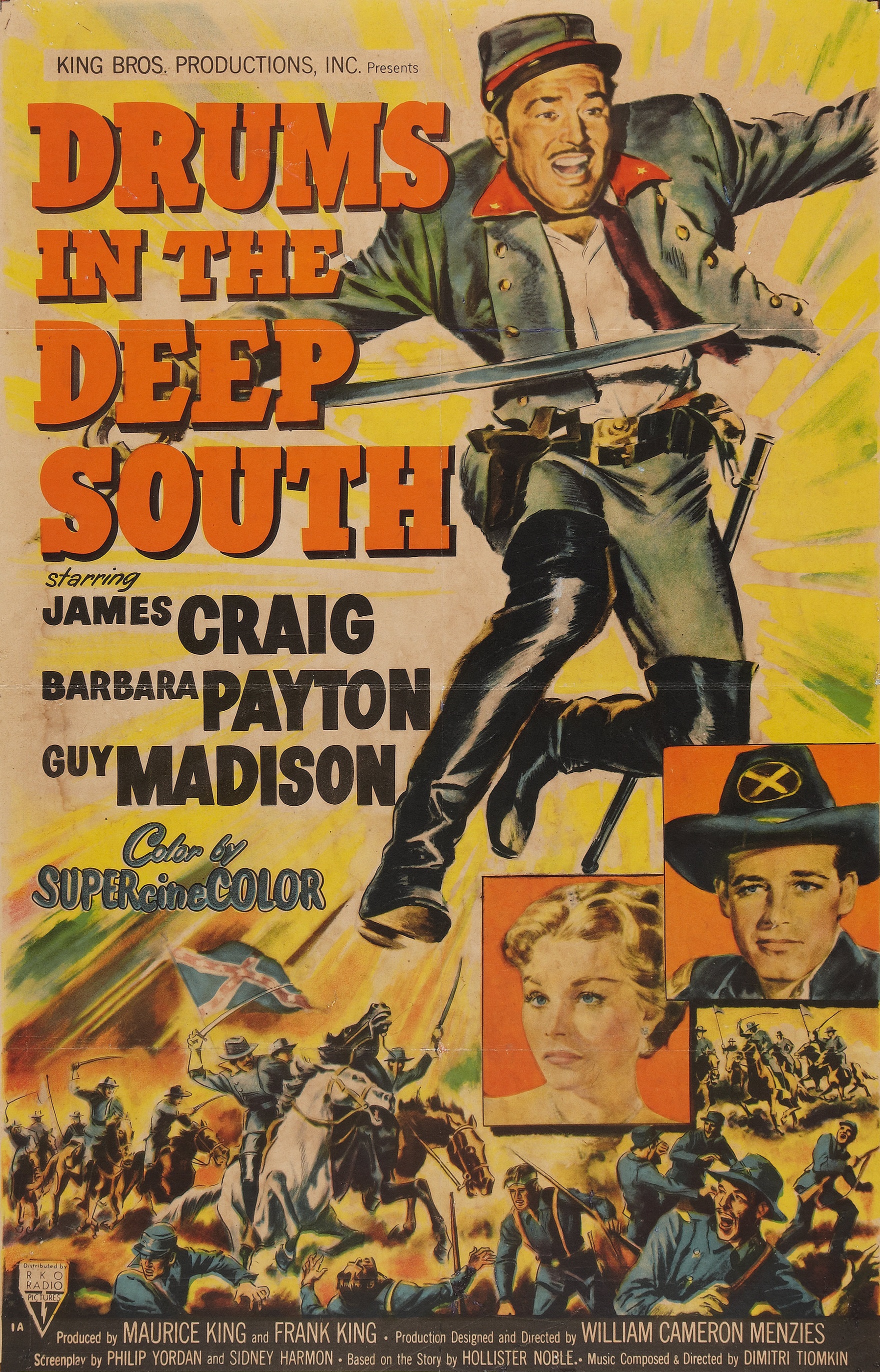
Drums In The Deep South (1951)

Best friends Clay Clayburn and Will Denning graduate from West Point only to soon find themselves fighting on opposite sides of the Civil War. When the two men meet each other in combat, neither knows it as each is in an artillery position hundreds of yards from the other. However, the love of Clay's life, Kathy Summers, does know and tries desperately to save her two good friends from killing each other.
A handful of heroes on a powder-keg mountain !
Gen. Johnston: A good soldier dies only once, and death is someone he knows.
Georgia
Tuolumne County, California, USA
Sonora, California, USA
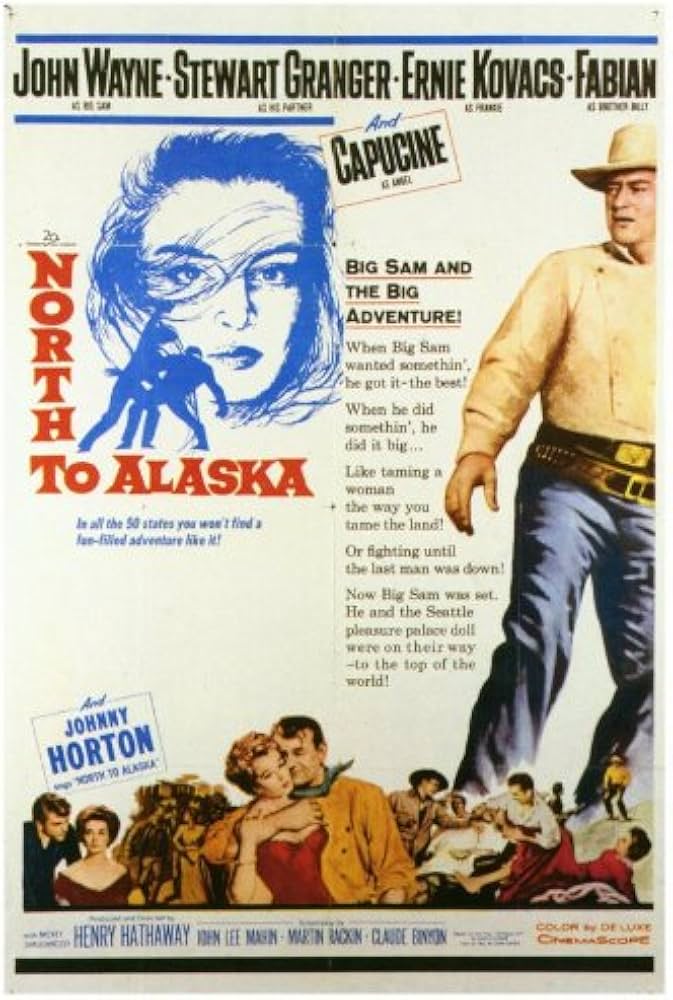
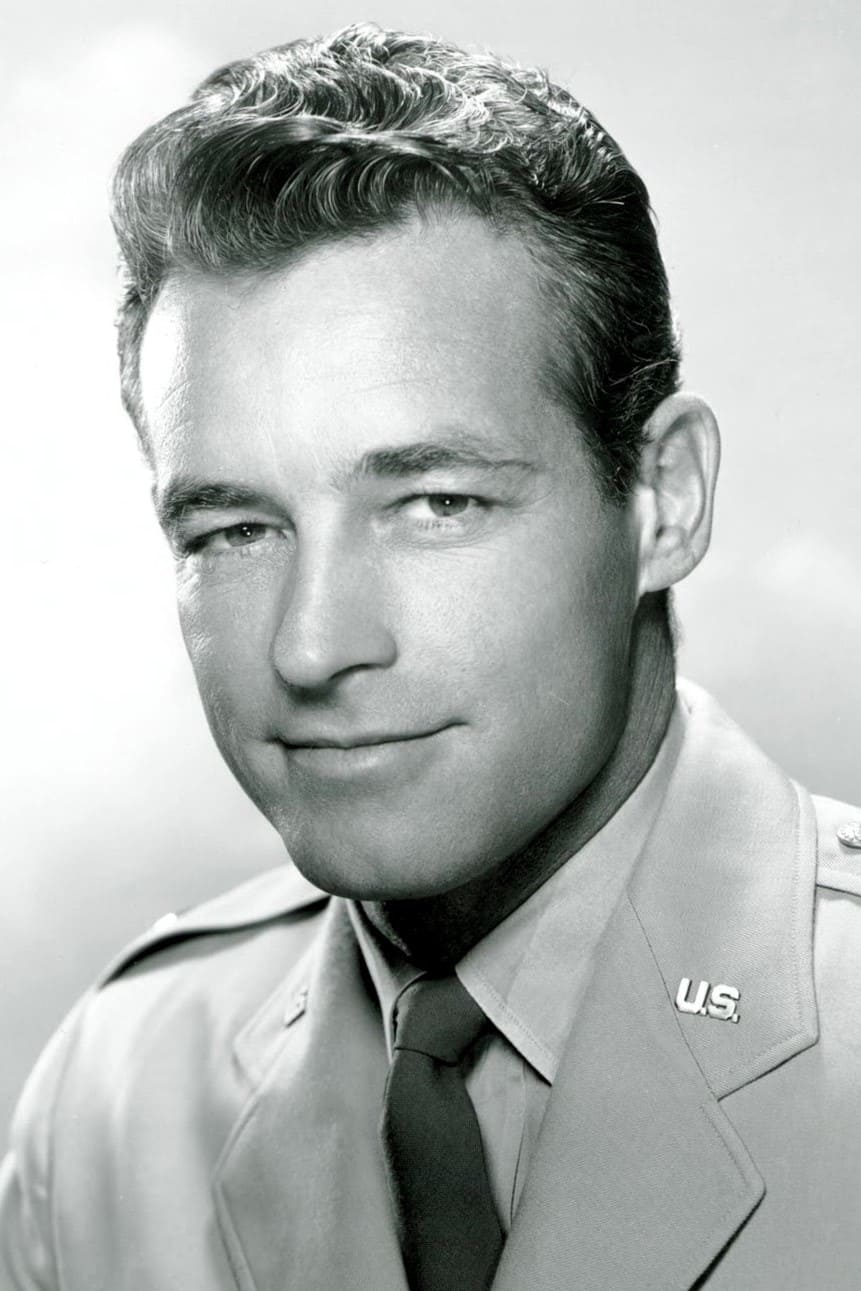
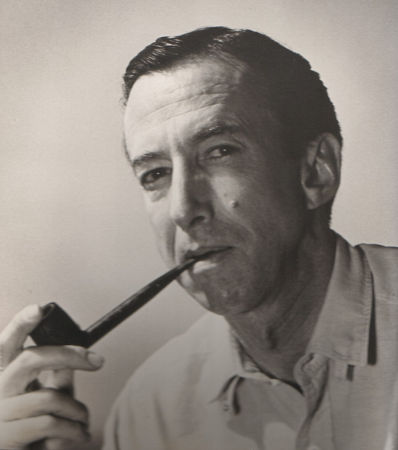
The failure of the original copyright holder to renew the film's copyright resulted in it falling into public domain, meaning that virtually anyone could duplicate and sell a VHS/DVD copy of the film. Therefore, many of the versions of this film available on the market are either severely (and usually badly) edited and/or of extremely poor quality, having been duped from second- or third-generation (or more) copies of the film.
Factual errors
There was no such thing as a "12 pound Brooke gun". Brooke guns were produced for use by the Confederate Navy and in some forts. They were never used as field guns by the Confederate field forces. Brooke rifles came in 6.4", 7", and 8". Brooke smoothbores came in 8", 10", and 11". None of these fired a round as small as 12 pounds. The guns shown appear to be 12-pound Napoleons.
The claimed range to the main target of 1,500 yards is well beyond the accurate range of any 12 pound gun in the Civil War, even allowing for the elevation of a mountain top.
The Confederates are repeatedly shown loading solid shot (cannonballs) into their artillery pieces; however, when the shot are fired, they explode, something a solid cannonball cannot do.
The detail consists of 20 men. This is inadequate to man four artillery pieces. A minimum of 40 to 50 men would be required for that number of guns.
Incorrectly regarded as goofs
When the Union artillery begins firing on the mountain the officer orders the guns double shotted to increase the range. Double shotting (putting in two cannonballs) would notably decrease the range. Actually, the order the officer gives is for the cannon to be double-charged -- i.e., using twice the usual amount of gunpowder to propel a single ball or shell -- which would increase the range but would also increase the stress on the barrel, which is why they have to reinforce it by wrapping it with piano wire.