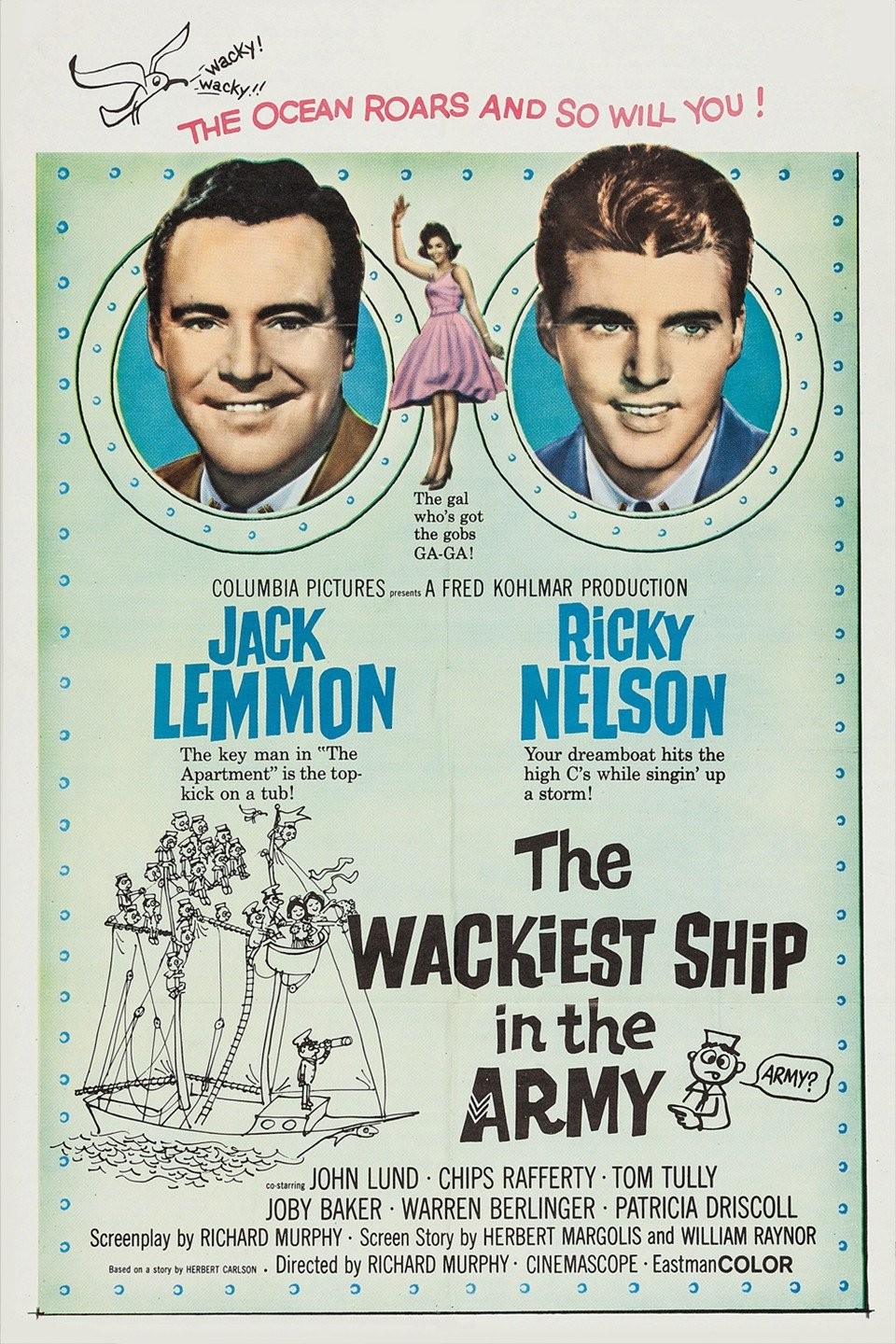
The Wackiest Ship In The Army (1960)

Lieutenant Rip Crandall is hoodwinked into taking command of the "Wackiest Ship in the Navy" - a real garbage scow with a crew of misfits who don't know a jib from a jigger. What none of them knows, including Crandall, is that this ship has a very important top-secret mission to complete in waters patrolled by the Japanese fleet. Their mission will save hundreds of allied lives - if only they can get there in one piece.
WACKY IS THE WORD FOR IT!
Narrator: If you remember Pearl Harbor, you'll recall that in the year that followed the Japanese were almost invincible. Early in 1943, however, they were checked. Stopped cold by the Marines at Guadalcanal, the Navy in the Coral Sea, and the Allied armies in New Guinea. This was a period of far-reaching decisions, desperate strategies, and incredibly daring counter-strokes - not the least of which involved two bright young naval officers...
Pearl Harbor Naval Station, Pearl Harbor, O'ahu, Hawaii, USA
Hanalei Pier, Hanalei, Kaua'i, Hawaii, USA
The original name of the boat in the movie was the "Fiesta". She was built in Hong Kong in 1932 entirely of teakwood. She was a 72 foot gaff-rigged schooner and came with a 165hp auxiliary diesel engine, weighed 28 net tons, drew 8 feet of water and could make 7.5 knots under power. She was also equipped with 3 tiled heads (bathrooms), two of them with showers, 1400 gallon fresh water tank, a 19 cubic foot deep freezer, and a 24 cubic foot refrigerator. Prior to the movie the Fiesta was owned by Martin J. Vitousek and his wife the former Beatrice Leiseder. (Source: The San Francisco Chronicle Sept. 14, 1952).
The movie is loosely based upon an actual commissioned Navy ship, the USS Echo (IX-95). As in the movie, the Echo was a scow loaned to the Navy from New Zealand in 1942, but was used for carrying cargo and supplies to Army bases in the South Pacific, earning her an Army commendation. She was decommissioned in 1944 and returned to New Zealand. After a lengthy and varied career, she ended her days as a museum in Picton New Zealand. Unfortunately, her condition had deteriorated to a dangerous state and she was beyond repair. She was demolished in 2015, 110 years after her launching in 1905.
As Lt. Crandall and Ensign Hanson are training the crew in how to unfurl the mainsail, you can see the stern of the USS Fletcher in the background. The Fletcher earned 15 battle stars in WWII and Korea. She was one of the most decorated destroyers to serve in the South Pacific. She was scrapped in 1972.
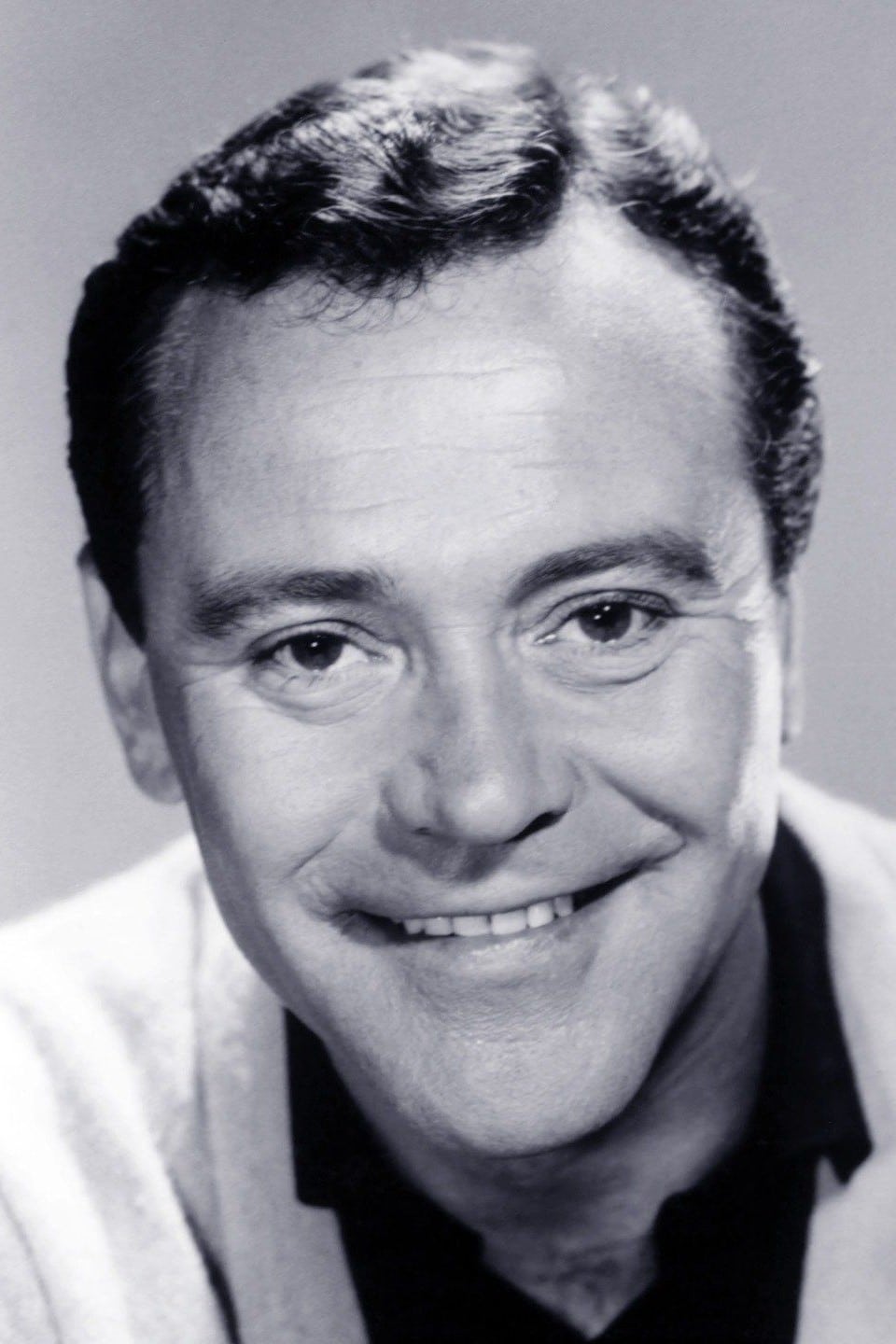
Jack Lemmon served in the U.S. Navy in World War II, with the rank of Ensign.
Mike Kellin, who plays the Chief, also plays this same part in the subsequent television series, The Wackiest Ship in the Army (1965). He is the only actor to reprise his role from this movie for the television series.
Continuity
When the Echo is escaping the Japanese and heading toward the reef, Jack Lemmon tells the crew to lower the centerboard - they proceed to do that (even while ducking when the Japanese shoot at the boat). However, when the Echo approaches the reef, the underwater shot shows the centerboard retracting - it retracts all the way up. Then when the underwater shot shows the Echo clearing the reef, the centerboard is down again.
When Cpl Gokora comes back to kill the two Japanese at the previous coastwatcher's hut, the second soldier is in the hut transmitting in Morse code. When Gokora pulls him back to kill him, both hands are visible but still hear code being transmitted.
As the Echo is leaving New Britain after dropping Patterson off and overpowering the Japanese who have captured the Echo, when they approach the reef there is a strong storm blowing. However as the sail down the river to the reef and after they have crossed the reef there is no storm.
As Echo is departing the Cape Gloucester and approaching the reef, the weather on the river has partly cloudy skies and strong wind or rain. As they approach the reef, they enter a storm with high wind, heavy rain, and rough seas. Once clear of the reef, the weather again changes to partly cloudy, no rain, light winds, and moderate seas.
Just before the Echo sails and is coming into the dock, a crewman is returning and stopped by the pier guards. In the background is a ship coming into port. When the sailor gets past the guards, there is no ship in the background.
Factual errors
Unfortunately, at the time this movie is supposed to take place, the U.S. military was still segregated. Outside of segregated units, African-Americans would have only been serving as messmen in the Navy, not as Shore Patrol or Signalmen.
In the opening sequence, the narrator mentions "cruisers of the Boise class." The USS Boise was a Brooklyn-class light cruiser; there were no cruisers of the Boise class.
In the scene where the Japanese reconnaissance plane photographs the ship, he uses an American made Graflex K-20 aerial camera.
Two silver bars are the insignia for captain, in the army. In the navy two silver bars are for lieutenant. A navy captain would have a silver eagle, the same as an army colonel. The rank of lieutenant stated in the movie is correct.
As the "Echo" is approaching the dock in Port Moresby she is informed by blinker they are entering a mine field. Lt Crandall mistakenly reads the Morse code as they are entering a 'fine' rather than 'mine' area. Morse code for the letter "F" is dot dot dash dot. The Morse for "M" is dash dash. It would be extremely difficult to confuse the four symbol "F" with the two symbol "M".
Incorrectly regarded as goofs
The character playing the commander in the Solomon Islands speaks of the Air Force. The movie takes place in 1942-43, and the Air Force wasn't a separate military force until 1947. However, the United States Army Air Force existed from 20 June 1941 until 26 July 1947 when it became the U.S. Air Force. Thus to refer to land based aircraft as "the Air Force" was common and understandable vernacular for military personnel in 1942/43.
Several times during the movie the "Air Force" is mentioned. Naval aviation was listed in many wartime Navy documents and was referred to by Navy men as the Naval "Air Force." Navy men would have referred to the US Army Air Forces as the "Army Air Force" or (incorrectly) as the "Army Air Corps," a term officially phased out in mid-1941.
Revealing mistakes
When the Echo is going over the reef on New Britain, the Japanese Major comes from below with his sword and attacks LT Crandall. The sword goes past Crandall under his arm. In a following shot, Crandall has the sword embedded in his chest. The major did not have a chance to strike twice before being overpowered.
Miscellaneous
As the "Echo" crosses the Great Barrier reef and as it leaves the coast of its mission, Tsunami sized waves are seen in the background yet once the passage is completed, the sea is dead calm.
When leaving dock to go between the two destroyers, the order is given to lower the centerboard and reverse engine. The next underwater shot shows the centerboard lowering and the prop wash (bubbles correctly showing the bubbles change directions towards the bow (reverse). The underwater shot changes to the stern/rear but still has the bubbles flowing to the stern.
Anachronisms
The aircraft that flies Lt. Crandall (Lemmon) from the carrier to his new assignment on the Echo appears to be an S-2 Tracker or its variant, the C-1 Trader. Both planes first saw service in the mid-1950s, several years after the time frame of the movie.
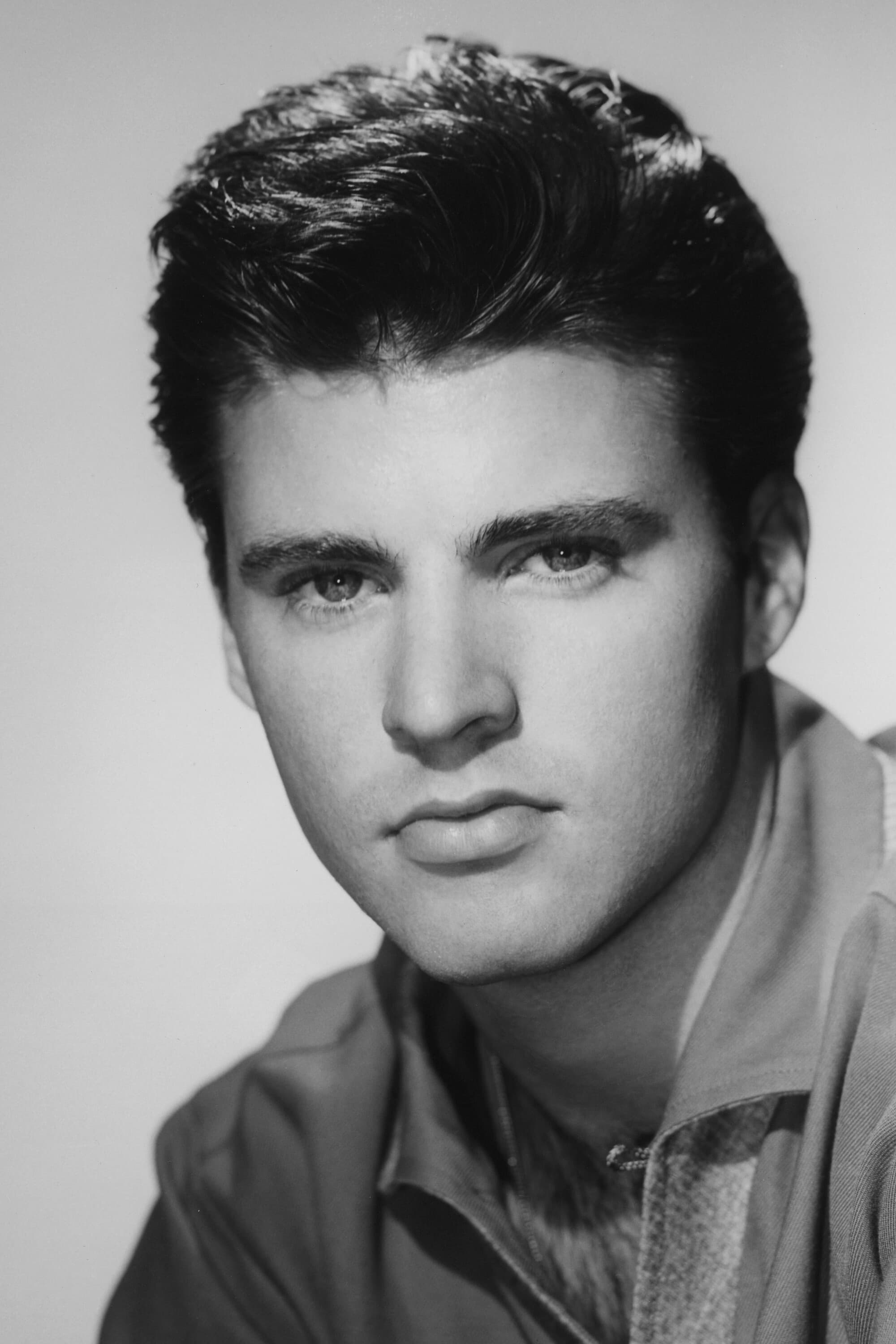
At one point Lt. Crandall (Jack Lemmon) is playing a game where he plays a few notes on a piano and Ens. Hanson (Ricky Nelson) tries to identify it. He plays a few notes of "Do You Know What It Means To Miss New Orleans" and Hanson immediately sings it. The story takes place in 1943 and the song was not written until 1947 for the movie "New Orleans".
When Lt Crandall is arguing with Lt Cmdr Vandewater in the latter's office over taking command of the Echo, a ship with hull number ARS-38 is visible through his office window. The ship in question, the USS Bolster, was not launched until 23 December 1944, whilst the movie is set prior to 2 March 1943, the date of the beginning of the Battle of the Bismarck Sea, described at the end of the movie.
The close-up shots of the Japanese patrol plane show the 2 Japanese pilots sitting in a Douglas DC-3 (or C-47) cockpit, but the long shots are of a Beechcraft D18 (a considerably smaller airplane).
The aircraft flying Lt. Crandall to his new assignment is a Grumman S2F-1, an anti-submarine warfare aircraft, which was in service with the US Navy from 1954 - 1976. The aircraft has markings for squadron VS-33, which was activated on April 1, 1960.
Errors in geography
Port Moresby is a much larger town and port than represented in the film. There is no large mountain behind it.
Character error
When LT Crandall (Lemon) meets Ens Hanson (Nelson) on the dock after Hanson is transferred by crane, Crandall quips that "Your brother is on the scow anchored on the other side." The Echo at that time was moored, not anchored, and a sailor who knows the gaff is the spar bent before the mainsail would not make a mistake like that.
The Niponese commander is apparently rendered unconscious below deck yet has control of his knees as Jack and Rick move about.