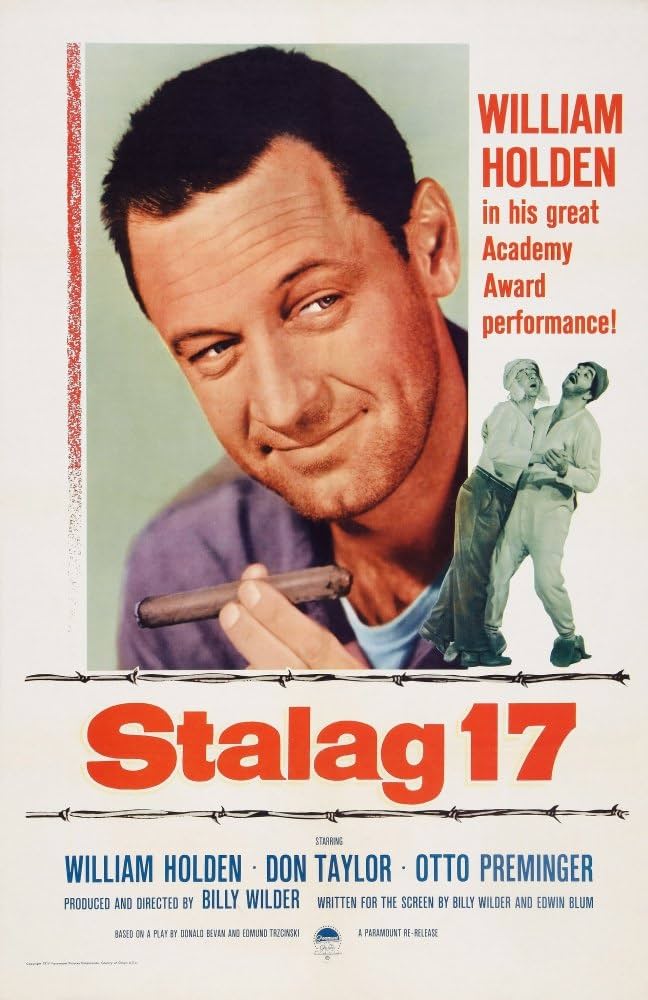
Stalag 17 (1953)

It's a dreary Christmas 1944 for the American POWs in Stalag 17. For the men in Barracks 4, all sergeants, have to deal with a grave problem - there seems to be a security leak. The Germans always seem to be forewarned about escapes and in the most recent attempt the two men, Manfredi and Johnson, walked straight into a trap and were killed. For some in Barracks 4, especially the loud-mouthed Duke, the leaker is obvious: J.J. Sefton, a wheeler-dealer who doesn't hesitate to trade with the guards and who has acquired goods and privileges that no other prisoner seems to have. Sefton denies giving the Germans any information and makes it quite clear that he has no intention of ever trying to escape. He plans to ride out the war in what little comfort he can arrange, but it doesn't extend to spying for the Germans. As tensions mount and mob mentality takes root, it becomes obvious Sefton will have to find the real German agent in their midst, which he finally does.
Hilarious, heart-tugging! You'll laugh...you'll cry...you'll cheer William Holden in his great Academy Award role!
[after Sefton cuts through the barbed wire to let them escape]
Sefton: Let's blow, Chauncey.
Lt. James Skylar Dunbar: Let's.
John Show Ranch, Woodland Hills, Los Angeles, California, USA
(prison camp)
Paramount Studios - 5555 Melrose Avenue, Hollywood, Los Angeles, California, USA
(Studio)
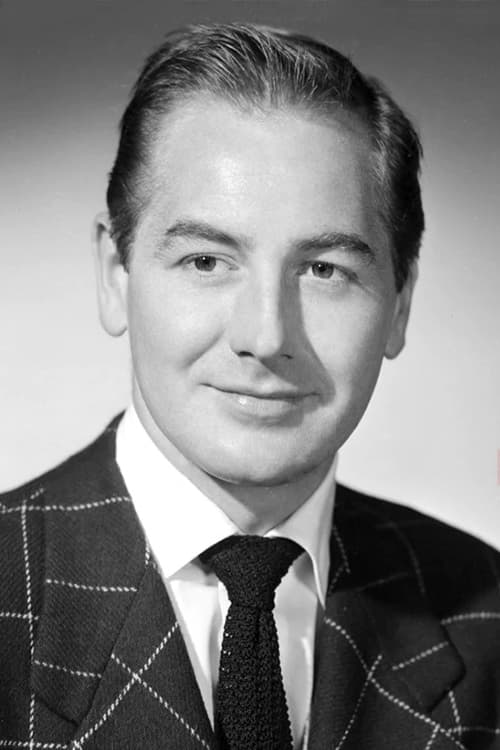
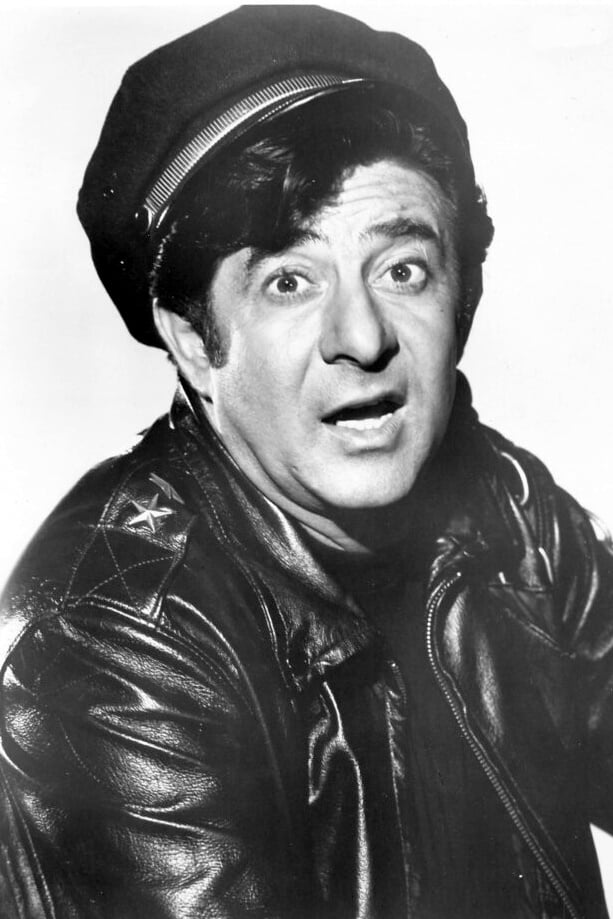
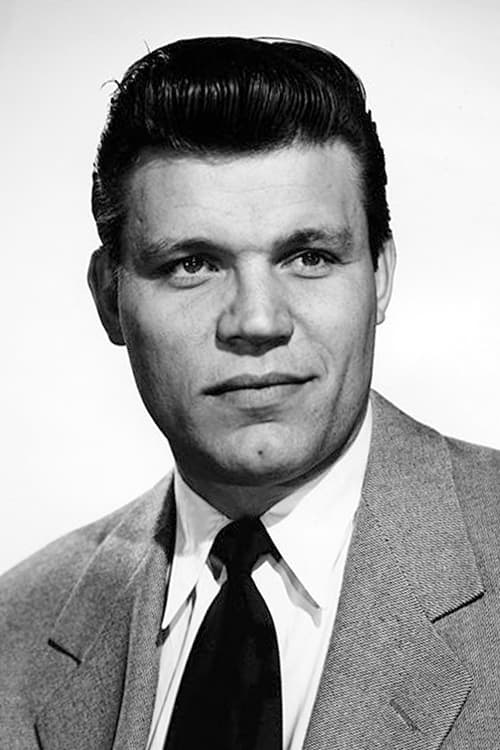
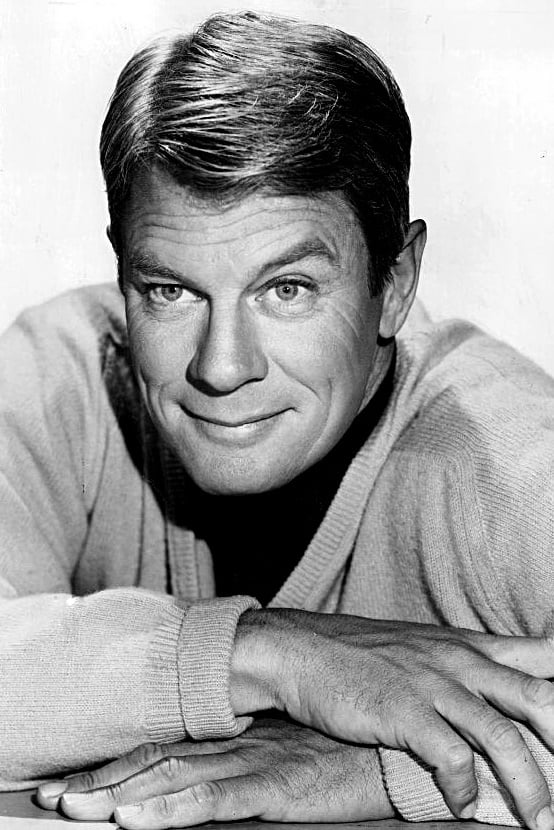
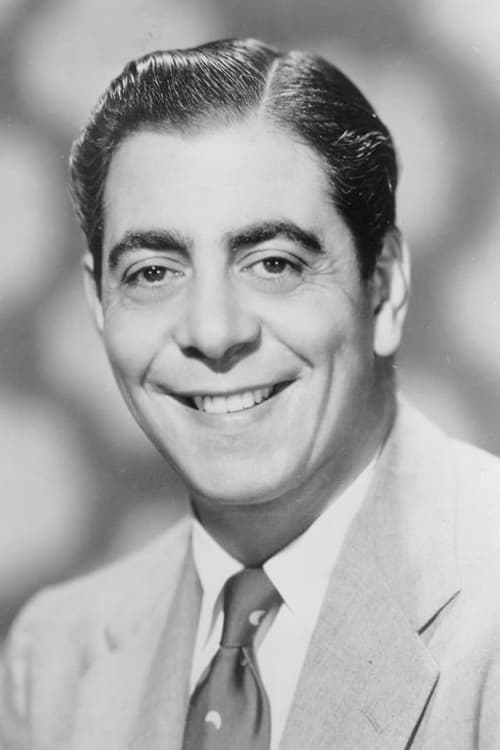
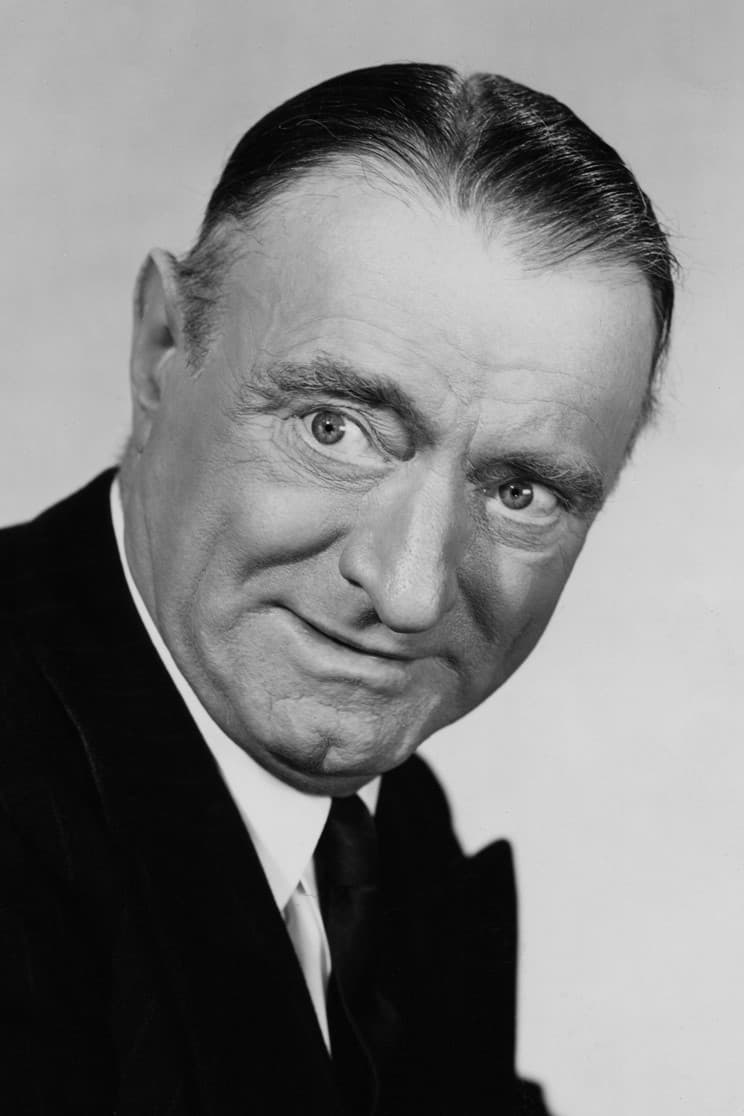
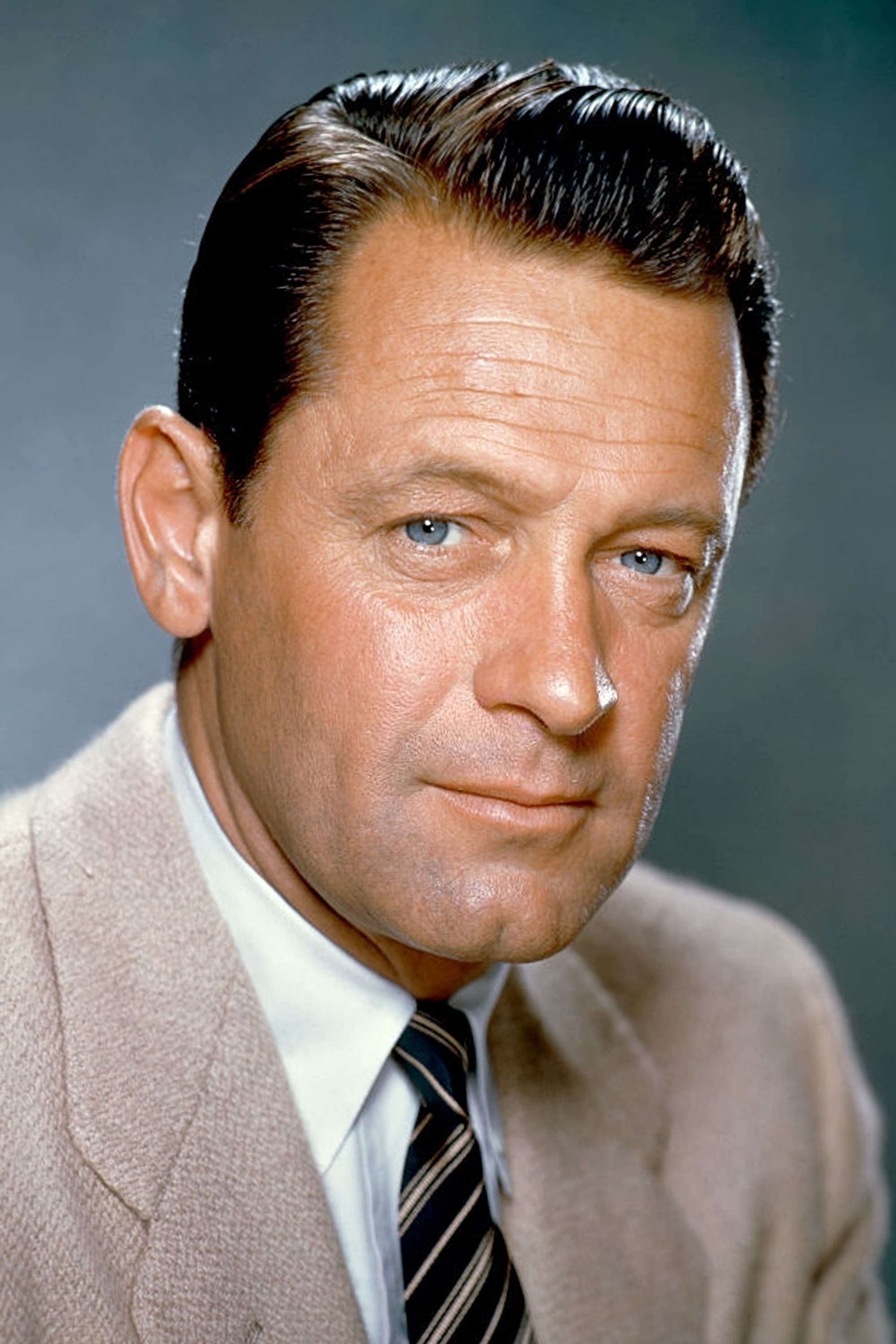
William Holden never felt he deserved an Oscar for his performance in this film. His wife felt it was to compensate for him not winning for "Sunset Boulevard (1950)."
William Holden did not like the part of Sefton as written, thinking him too selfish. He kept asking Billy Wilder to make Sefton nicer. Wilder refused. Holden actually refused the role but was forced to do it by the studio.
Otto Preminger always claimed that, as a director, he would only shout at actors if they were late or if they did not know their lines. Employed solely as an actor in this film, he told Billy Wilder at the start of filming that if he ever forgot his lines, he would present Wilder with a jar of caviar. Wilder later told interviewers that he soon had dozens of such jars.
To improve the chances for commercial success in West Germany (at that time already an important market for Hollywood) a Paramount executive suggested to Billy Wilder that he should make the camp guards Poles rather than Germans. Wilder, whose mother and stepfather had died in the concentration camps, furiously refused and demanded an apology from the executive. When it didn't come, Wilder did not extend his contract at Paramount
This film was one of the biggest hits of Billy Wilder's career. He expected a big piece of the profits. The studio accountants informed him that since his last picture "Ace in the Hole (1951)" lost money, the money that picture lost would be subtracted from his profits on this film. Wilder left "Paramount" shortly after that.
Continuity
At the movie's beginning, the narrator says that at least the two escapees will have the longest night of the year (December 21st). Towards the end of the movie, it's Christmas Eve (December 24), yet at least two weeks of events seem to have elapsed since the movie's beginning and the end.
When Cookie starts to remove the radio from the pants leg of the soldier on crutches, it's visible right at the hem, but when the camera cuts away and then cuts back a moment later, Cookie is reaching farther up the pants leg to remove the radio. Correction - it isn't Cookie, But Sgt. "Blondie" Peterson that removes the radio from the pants leg.
When William Holden's character is lying on his bed on his back and first notices the swinging light bulb's shadow near his feet, the next scene shows the light from his bunk and there is no light source behind the swinging light that could have cast that shadow.
The length of the lamp cord for the mailbox signal changes in many scenes. When we see it "knotted" and Shultz pulls it down the first time, it sets less than a foot over the table. Then in another scene, it is hung closer to 3 feet over the same table. In the next mail drop, it again pulls down very close to the table. Then after the information about the "time bomb" is delivered, it now hangs higher again.
Just before Sefton reveals the mole, he throws an open jackknife onto the table and says, "Here's the knife to do it with. Only make sure you got the right throat." The knife quivers and barely sticks in the table. Shortly after, the knife is stuck firmly in the table, more upright.
Factual errors
Schulz is identified as a Feldwebel or Sergeant, but he is wearing the rank insignia of an 'Unteroffizier' or Corporal. The German Army's rank insignia were on the shoulder straps. A Feldwebel's insignia would be 'lace' that went around all edges of the shoulder strap, plus a star or 'pip' on the strap. Schulz's shoulder straps do not have lace at the bottom of the strap nor do they have stars; that is the insignia of an Unteroffizier.
During WW2, unlike in German Army Stalags which had separate camps for officers, Allied Airforce POWs of all ranks were held in separate areas within the same Stalag Luft. These camps, however, were all operated by Luftwaffe personnel, as depicted in the TV series "Hogan's Heroes."
When Sefton is explaining how he got hold of the telescope, he explains that he got together a "few lenses and a mirror". The telescope he has in the barracks is a refractor telescope, which doesn't use mirrors.
The flight jacket worn by the captured gunner with Lt. Dunbar is not authentic with its slash pockets. Also, while the 600+ men in that part of the camp are all described as captured airmen, many are wearing infantry men's long wool overcoats and lightweight waist-length jackets that aircrew would not have worn. Aircrew would have some type of leather or cloth flight jacket or coveralls on rather than overcoats. Sefton's B3 jacket is authentic but looks almost new. He also wears an A2 in one scene. Not too unusual since gunners would wear many layers of clothing in their unheated bombers.
In his opening monologue, 'Cookie' claims he was shot down over Magdeburg in 1943 and spent two and a half years in Stalag 17. The first Eighth Air Force raid to go anywhere near Magdeburg took place on July 28, 1943, when the target was in Oschersleben, which was still some twenty miles short of Magdeburg. Projecting forward two and half years from that time would have had 'Cookie' still in Stalag 17 into January or February of 1946, well after the war ended and all survivors would have been repatriated.
Incorrectly regarded as goofs
In at least two scenes, German soldiers are seen using US Browning 30 cal. machine guns; some still think of it as an error, but the use of captured enemy equipment was common by all sides in the war. A POW compound would be the ideal place to locate captured weapons, with a relatively limited ammo supply, whilst they still served to deter escape.
The map of Germany in von Scherbach's office in 1944 would include, not only Austria and Sudetenland, but also Gdansk/Danzig and the Polish Corridor, large parts of western Poland and the Saarland, all considered ethnically German by the Nazis and incorporated into the Reich. This could simply be an obsolete map never discarded.
It was routine policy in the Third Reich to send captured Jewish enemy soldiers to extermination camps. This being the case, it's rather implausible that one of the prisoners in Stalag 17 is named Shapiro. However, many Jewish soldiers had their dog tags stamped as "P" for "Protestant" (for obvious reasons) so it is not impossible.
We learn from the escape plan in the beginning of the movie that the Stalag 17 prison camp is located on the river Danube near Linz, which is on the Austrian and German Border. Later in the movie, when the prisoners are watching the women in the Russian compound, Cookie claims that on a clear day, you could see the Swiss Alps with this telescope. Nobody could see the Swiss Alps, with even the best telescope from this point of view, because the Austrian Alps would definitely be in the way. This could be a simple exaggeration of the power of the telescope within the character of the prisoners whose scientific knowledge is limited. With a good telescope one can see mountains on the moon; no telescope can ever show anything beyond the horizon.
Revealing mistakes
When Harry Shapiro pulls the teabag out of his pocket to dunk it into Lt. Dunbar and Sgt. Bagradian's tea cups, you can see the pocket is wet from previous takes.
When Dunbar climbs out of the water tank he nudges two icicles that move. If they were real icicles they would have broken.
Early in the film Sefton (William Holden) calls Neville Brand's character Duke, Spook/ or Spuke. Billy Wilder might have failed to notice this as the actors were still getting familiar with each other?s' characters - and the scene was going so good.
Miscellaneous
When the Geneva man is inspecting the barracks, one of the German officers mentions that each barrack holds 75 men. However, there appears to be never more than 20-30 men assigned to Barrack 4 nor more than 20 bunk-beds are seen in the movie. Seventy-four men would require 37 bunk-beds, much more than Barrack 4 could accommodate.
There are several comments about the mix of US air force and army uniforms in the camp. Uniforms for POWs were supplied by the prisoner's home country through neutral organizations such as the Red Cross. That is why some the prisoners are wearing army uniforms rather than air force uniforms since only those will fit the wearer.
(at 37:35) During the rat race scene, the spectator prisoners are seen in various wide shots, and the room that they're in is clearly more than twice the size of their barracks.
The chessboard is incorrectly set up. There should be a white square in the first row at the player's right side. In the movie, the white square is to the player's left.
The "tunnel" that Manfredi and Johnson use is not a real tunnel: it just leads from under the barracks to the outside. But later, the prisoners are ordered to "undig the tunnel that they dug up": a real, quite long tunnel in the open, and right in the middle of the compound, which would be impossible not to notice by the guards.
Anachronisms
As is common in many older World War II movies, the SS men sent to transport Dunbar to Berlin are wearing the iconic black SS uniforms that were discontinued as duty wear in 1939, 5 years before the setting of the film. Additionally, the uniform of one of them has a cuff title with just the numeral "2." Cuff titles were only worn by combat units, such as the Waffen-SS, and contained unit names and/or symbols. Worn on a general duty SS man this cuff title makes no sense and refers to no known SS organization.
The prisoners need a telescope to view the women's shower; in fact Cookie says they are "about a mile away". However the men can apparently see Harry and Animal trying to sneak in with the whitewash simply by looking out the barracks window.
Audio/visual unsynchronized
In the last seconds as the film begins to fade out, you see Cookie whistling "When Johnny Comes Marching Home Again", but the audio is not in sync.
When Harry Shapiro, dressed in drag as a blonde, requests more music during the Christmas party, the recorded music begins without the record player being manually started.
Crew or equipment visible
At the very end of the film, as Hoffy blows out the table candle, an overhead stage light can be seen and heard shutting off in the background of the barracks set.
The partial moving shadow of the dolly camera is visible for 1-2 seconds in the lower left hand corner as the dolly camera shoots its close up of the lieutenant in the water tower in the daylight, before the scene cuts to night time.
Errors in geography
It's December 1944. Every morning at 6:00 it's roll call for the prisoners of Stalag 17. Although in the middle of December, in southern Germany the sun will never rise before 8:00; the roll call in the movie is in full daylight.
Character error
The German machine gun team that shoots the escaping prisoners in the beginning of the film, us an American M1919 .30 caliber machine gun, instead of a German MG-42.
In the opening narration, Cookie says, "What gets me is that there never w-was a movie about POWs - about prisoners of war." GRAND ILLUSION (1937) was about two French POWs in a German POW camp in WWII.