
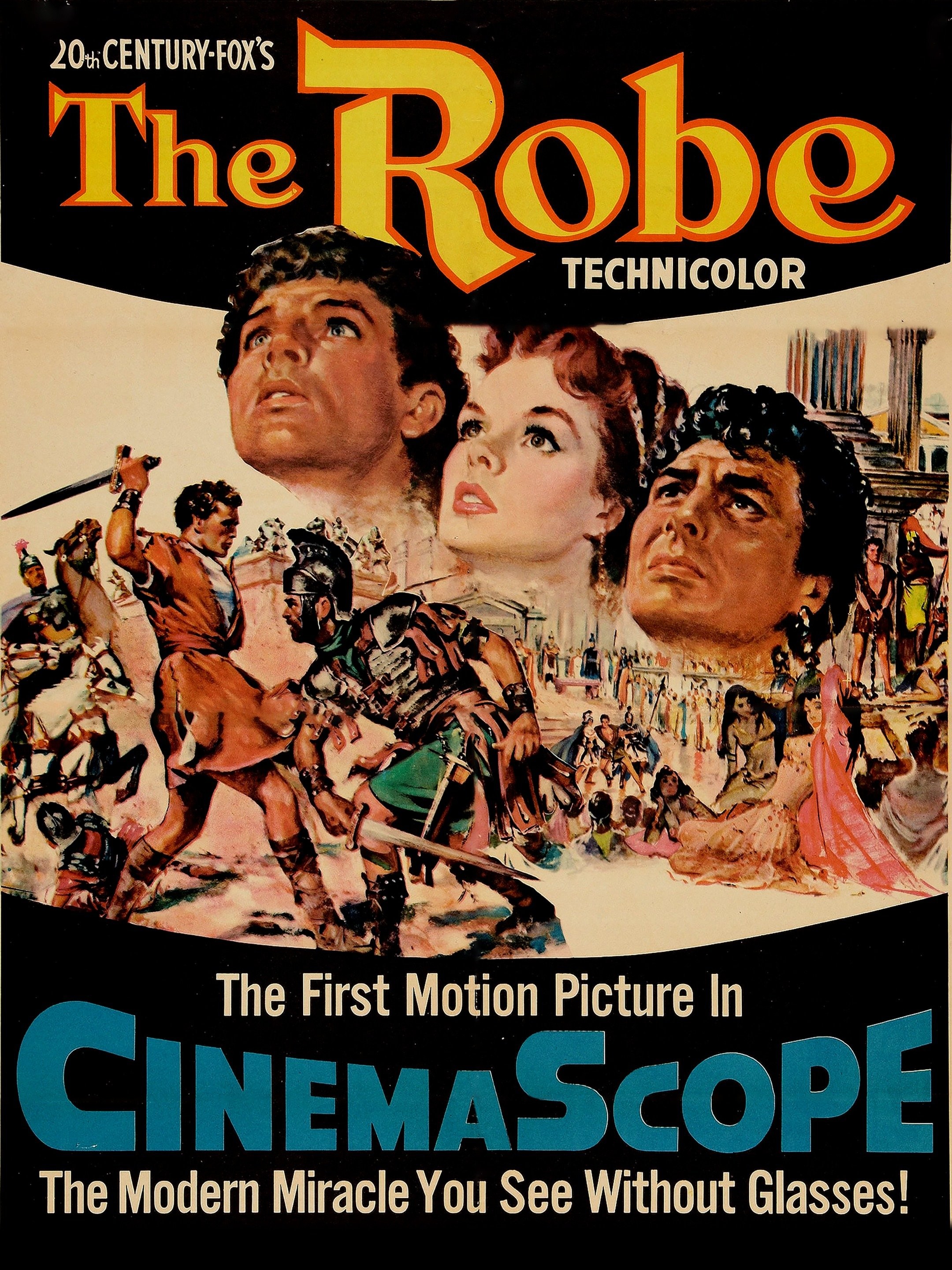
The Robe (1953)

Marcellus is a tribune in the time of Christ. He is in charge of the group that is assigned to crucify Jesus. Drunk, he wins Jesus' homespun robe after the crucifixion. He is tormented by nightmares and delusions after the event. Hoping to find a way to live with what he has done, and still not believing in Jesus, he returns to Palestine to try to learn what he can of the man he killed.
Timeless in its wonder! Immortal in its impact!
Demetrius: Until now you only remembered what you did to a man. The wrong, and your shame. But now - you remember the man.
Corriganville, Ray Corrigan Ranch, Simi Valley, California, USA
Iverson Ranch - 1 Iverson Lane, Chatsworth, Los Angeles, California, USA
La Pedriza, Madrid, Spain
(Exterior)
Stage 2, 20th Century Fox Studios - 10201 Pico Blvd., Century City, Los Angeles, California, USA



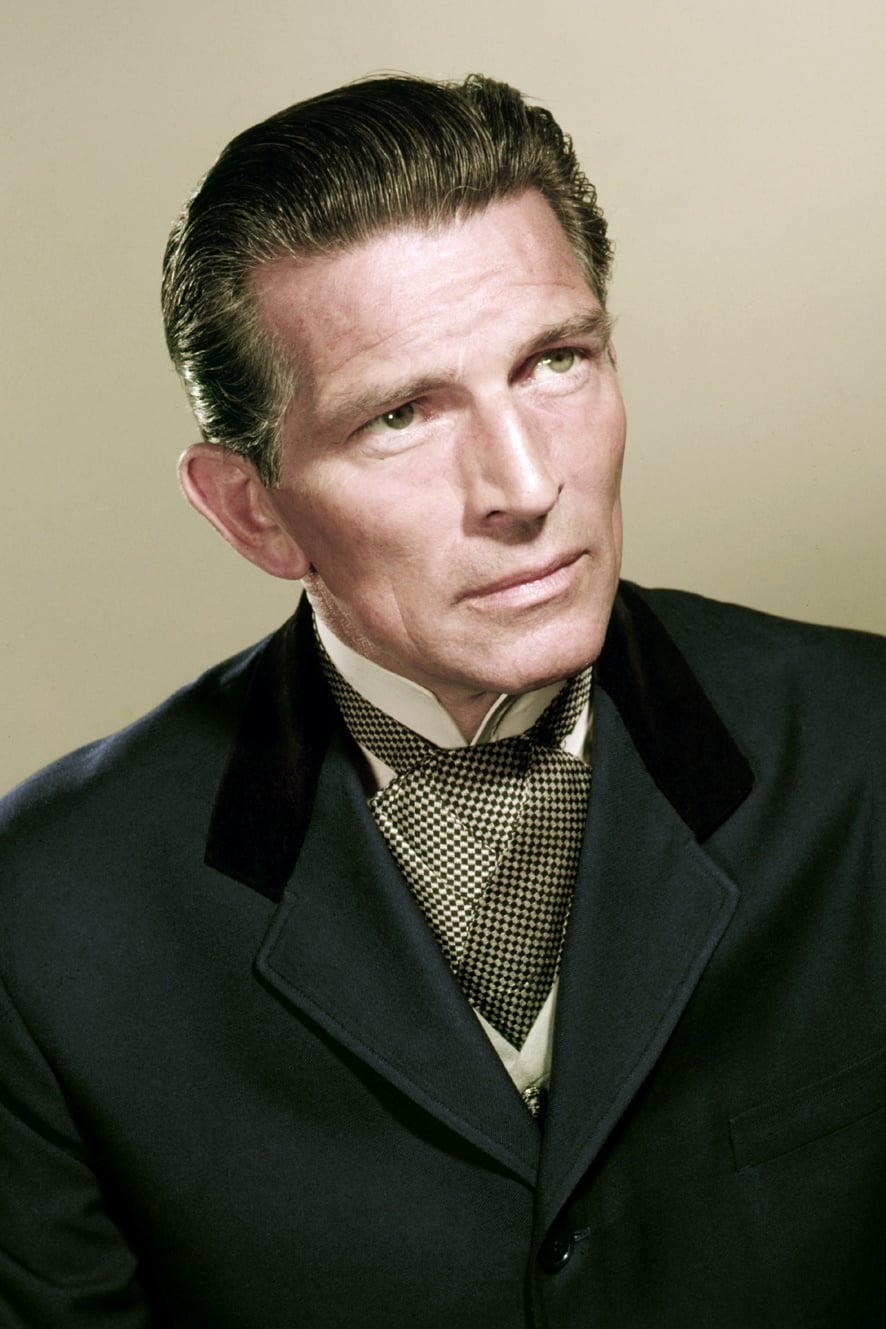
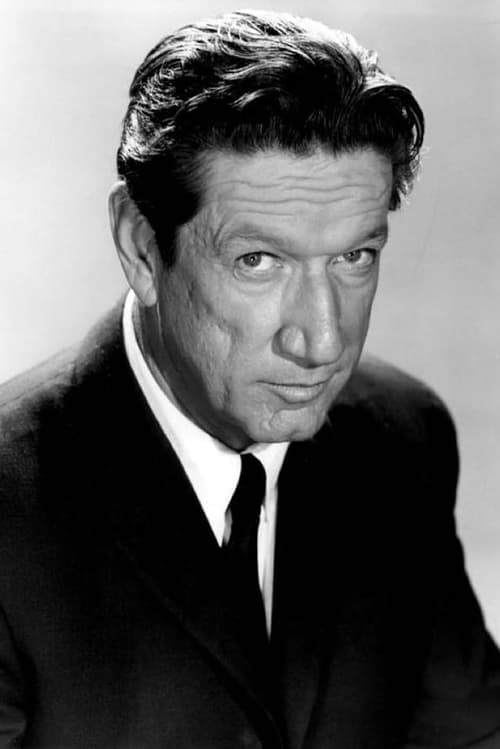

Richard Burton was once threatened with a gun by Stewart Granger because of the affair he was having with Granger's wife Jean Simmons during filming.
The sequel, Demetrius and the Gladiators (1954), was put into production before this film had been released; the studio didn't know whether it, or CinemaScope, would be successful.
Richard Burton smoked 100 cigarettes a day throughout filming.
Richard Burton hated making the film so much that he turned down a contract from 20th Century-Fox. He was amazed to receive an Oscar nomination after critics had almost universally described his performance as "wooden". He later said the film made him want to "throw up" and that it "was lousy, but an almighty hit. I was dull as ditchwater and an almighty flop." Still, Burton would make more films at Fox than at any other studio.
Richard Burton had a ferocious argument with 20th Century-Fox studio chief Darryl F. Zanuck before the film's release. This was another reason why he decided to return to London's West End theater district rather than remain in Hollywood.
Continuity
At the end of the Marcellus sword fight (at 1:46), the centurion drops his sword on the platform before falling over the edge, but in the next cut, he falls into the water with sword in hand.
While Miriam and Marcelus are chatting under the tree and Miriam is weaving a basket she runs out of basket material but the next long shot she has a long section of it, not once but twice, without picking up another piece of weaving material.
Factual errors
Caligula is depicted here and in the sequel Demetrius and the Gladiators (1954) as persecuting Christians. However, he reigned from 37 to 41, while Christianity was still a nascent religion with most of its followers in the eastern Mediterranean. The first mention of Christians from the perspective of the Roman government, according to the Roman historian Suetonius, wasn't until the reign of his successor Claudius (reigned 41-54). The first major incidents of persecution of Christians did not occur until the reign of Nero (54 to 68).
There are repeated references to galleys leaving Rome for Palestine (and vice versa) "on the next tide". The maximum tidal range in the Mediterranean sea is ~1.6m (~5 ft) (off the coast of Tunisia), but the typical range off the west coast of Italy and the coast of Palestine is only about 0.4m (~16 in) or so. This is too slight to be of concern to sailors.
Justus tells Marcellus that his grandson, who was born crippled and whom Jesus healed, was named for "Jonathan of old", who (Justus claims) was also born crippled. In the Jewish community, "Jonathan of old" would be the son of Saul, first king of Israel, and the best friend of David, Saul's successor. Jonathan was not born crippled; he had a son, Mephibosheth, who "was lame in both feet", but that was the result of an accident when he was 5 years old (2 Samuel 4:4).
Centurion Paulus should be wearing a transverse plume on his helmet not a front to back placement.
Gallio arrives in Jerusalem on Palm Sunday to be told by Pilate on Good Friday that Tiberius has called him back to Rome. At the time, it was not possible for the news of Tiberius' order to have made it from Rome to Jerusalem in less than one week.
Revealing mistakes
In the sword fight between Marcellus Gallio and the Roman commander, there is a shot of Gallio holding his sword to the commander's throat, while the commander is on the ground. The sword is an obvious prop that is rounded on the end like a spatula.
Miscellaneous
In the early Roman market scenes there seems a version of Michelangelo Buonarroti's statue of David. This was made in 1501-5 and was an original composition, not a copy of any Classical original.
Anachronisms
At the beginning in the Roman Forum, there is a statue of the Roman poet, Antinuous, who was not born until 80 years or so after Christ's death.
The characters constantly refer to the province in which Jerusalem is located as "Palestine". At the time the film is set (AD 30s), Jerusalem was located in the province of "Judea". Judea would not be called Palestine until Emperor Hadrian renamed it ("Syria Palaestina") in AD 135 at the end of the Jewish Revolt.
The Emperor Tiberius' wife, Julia, puts in an appearance complaining about Diana being considered "too good for Caligula", and Tiberius mentions his "30 years with Julia". Actually, his wife Julia, the daughter of his predecessor, the Emperor Augustus, had been permanently exiled by her father for lewd behavior long before Tiberius became Emperor. By the time the movie opens, in the last years of Tiberius' reign, Julia had been dead for decades.