
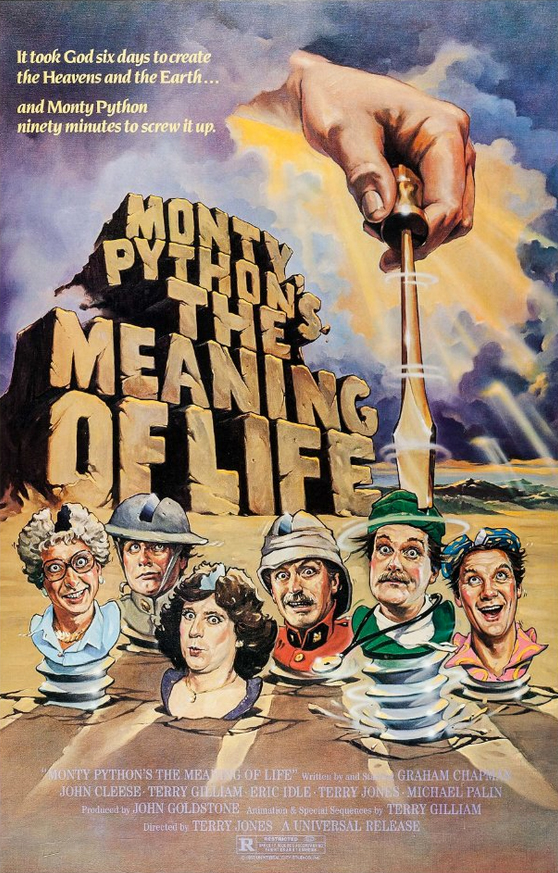
Monty Pythons The Meaning Of Life (1983)

Why are we here, what's it all about? The Monty Python team is trying to sort out the most important question on Earth: what is the meaning of life? They do so by exploring the various stages of life, starting with birth. A doctor seems more interested in his equipment than in delivering the baby or caring for the mother, a Roman Catholic couple have quite a lot of children because "every sperm is sacred". In the growing and learning part of life, Catholic schoolboys attend a rather strange church service and ditto sex education lesson. Onto war, where an officer's plan to attack is thwarted by his underlings wanting to celebrate his birthday, and an officer's leg is bitten off by presumably an African tiger. At middle age, a couple orders "philosophy" at a restaurant, after which, the movie continues with live organ transplants. The autumn years are played in a restaurant, which, after being treated to the song "Isn't It Awfully Nice to Have a Penis?" by an entertainer, sees the arrival of an extremely fat man. He can eat a lot, but also throw up quite copiously. The Grim Reaper brings for the final stage of human life, death, a visit to a mansion, where the people are rather interested in him. But life doesn't stop at death. It's onto heaven, where it's always Christmas.
It took God six days to create the earth, and Monty Python just 90 minutes to screw it up.
Mrs. Moore: Is it a boy or a girl?
Obstretrician: I think it's a bit early to start imposing roles on it, don't you?
Battersea Power Station, Battersea, London, England, UK
(chase, sketch: Find The Fish)
Elstree Studios, Borehamwood, Hertfordshire, England, UK
(Studio)
17 Bankfield Street, Colne, Lancashire, England, UK
(sketch: Every Sperm is Sacred)
Bankfield Street, Colne, Lancashire, England, UK
(sketch: Every Sperm is Sacred)
Churchill College, Cambridge University, Cambridge, Cambridgeshire, England, UK
(church scene)
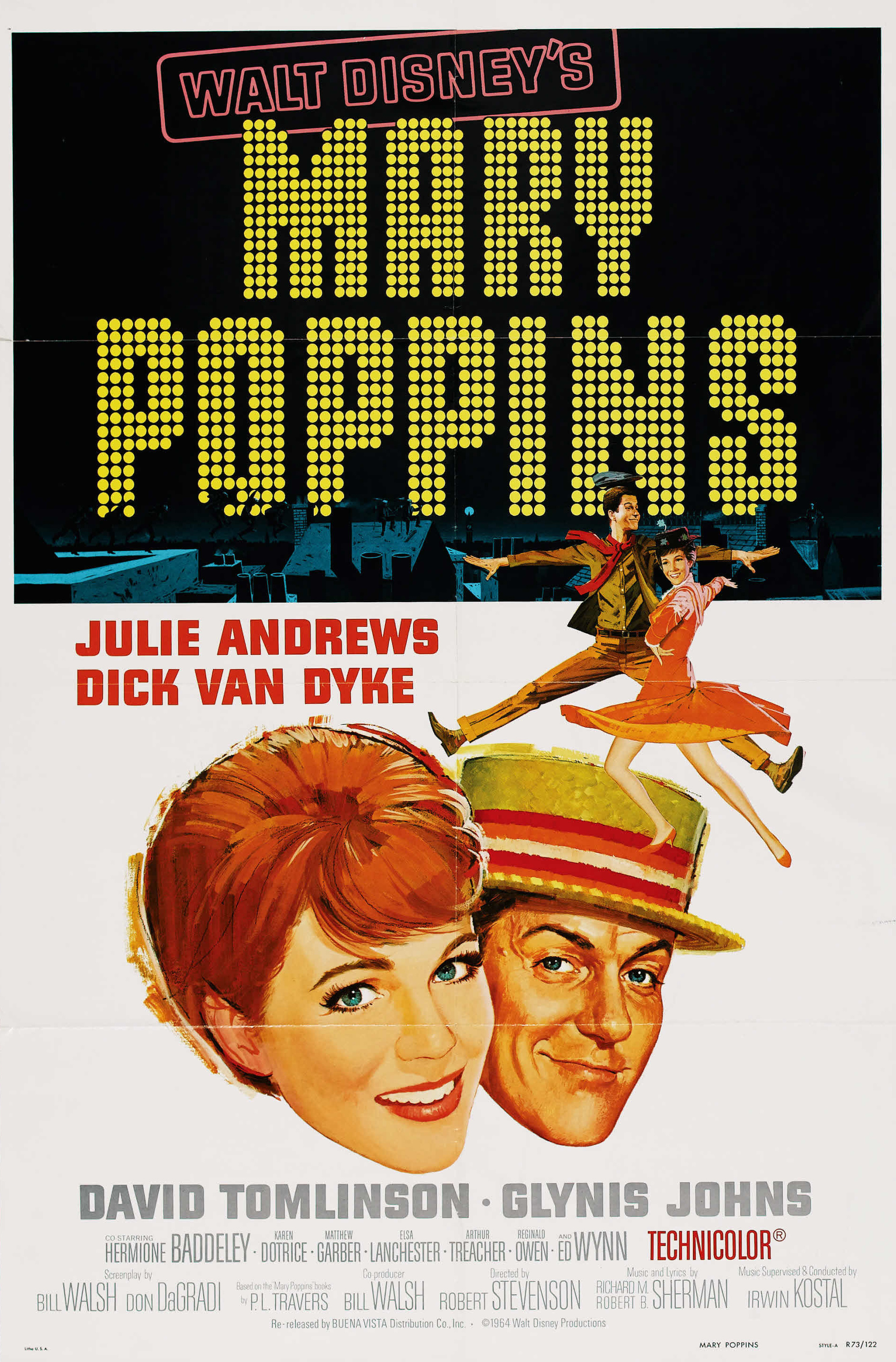





Terry Jones spent most of the budget on the "Every Sperm Is Sacred" sequence. The rest of the team found out later.
Sensitive to the young actors in the "Every Sperm is Sacred" scene, Sir Michael Palin actually said "those little rubber things on the end of my sock." The word "cock" was dubbed in later.
The kids who sang in the "Every Sperm is Sacred" sketch later said they had no idea what they were singing about.
"The Crimson Permanent Assurance" segment was filmed as if it were a completely separate project. Terry Gilliam got his own soundstage, crew, and cast. This segment continued to expand because, according to Gilliam, nobody told him to stop.
Graham Chapman, who was openly gay, asked to play God in this movie because he was frustrated at the Church of England for refusing to marry him and his partner, David Sherlock. At the time, same-sex marriage was not legal in the United Kingdom, nor recognized by the Church of England.
Continuity
In the war sequence, the soldiers give their sergeant a clock, which is placed on the edge of the mound they are hiding behind, clearly visible. In the next shot, the clock is gone.
In the classroom scene, the young student seated in the rear right corner appears and disappears three times.
At the start of the miracle of birth section, the mother is traveling head first. Just before she leaves the corridor, the shot from the gurney indicates that she is moving feet first.
Mr. Creosote vomits onto the floor, and only little traces can be seen on the shoulder of his suit jacket. After the guests are seen looking shocked, before the waiter shows him the menu, there is much more vomit on his shoulder than before.
During the shot of Mr. Creosote inflating, some of the extras on the right hand side of the screen can be seen behind him. After the explosion, many of the same extras can be seen in one shot being hit by Mr. Creosote's entrails, but once the explosion is clear, they are again behind him, but free of any of the viscera that they were previously splattered in.
Revealing mistakes
In the death sequence, the name at the top of the mausoleum is "nitruc" instead of "curtin", so the segment is reversed/flipped.
In the "Live Liver Donation" scene, John Cleese is clearly chuckling at the performance of his two fellow Pythons.
When Mr. Creosote throws up for the first time in the movie, traces of vomit can be seen on the floor prior to his vomiting, presumably leftovers from previous takes/rehearsals.
Anachronisms
The Anglo-Zulu War scene is set in 1879, when wearing a mustache was mandatory in the British Army. Despite this, some of the soldiers (like Terry Jones's character) are seen without a mustache.
Crew or equipment visible
In the vomiting scene, the end of the hose the liquid comes out of is visible right after the bucket is taken away.
Boom mic visible
When The Grim Reaper talks to the couple and their dinner guests, the boom mic moves along the fabric ceiling.
Character error
The organ harvester tells the man's widow that he has to be dead to donate his liver. While the man will almost certainly die from being cut open the way the way he was, one doesn't need to be dead to donate their liver. Unlike other internal organs, the liver can regenerate lost tissue, so he could have donated half of his liver and survived.
In the WWI scene, the officer is called Captain Biggs, but he only has 2 pips on each sleeve, denoting the lower rank of Lieutenant.