
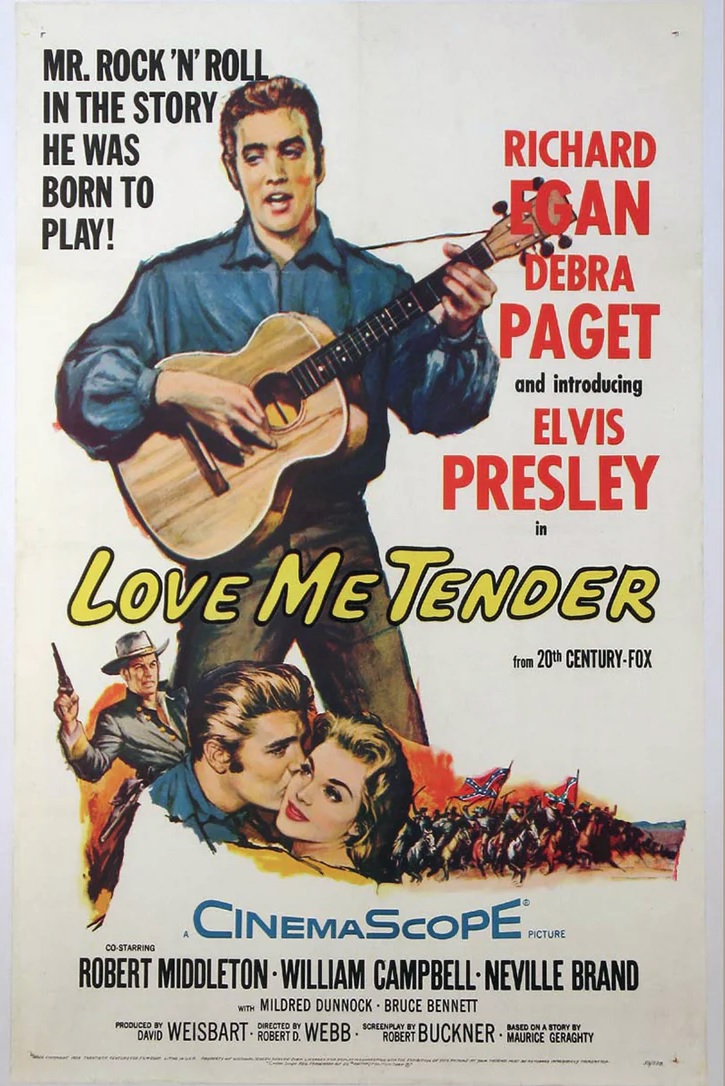
Love Me Tender (1956)

Elvis plays Clint Reno, one of the Reno brothers who stayed home while his brother went to fight in the Civil War for the Confederate army. When his brother Vance comes back from the war, he finds that his old girlfriend Cathy has married Clint. The family has to struggle to reach stability with this issue. Vance is involved in a train robbery, while a Confederate soldier, of Federal Government money. There is a conflict of interest, when Vance tries to return the money, against the wishes of some of his fellow Confederates.
IT'S MR. ROCK N'ROLL...IN THE STORY HE WAS BORN TO PLAY!
Clint Reno: [In a rage] Go on, say it Cathy! Say you don't love him. You can't, can you? You think I couldn't feel it? With you lying awake beside me every night? Wishing I was Vance! Wishing you'd waited for him and never married me!
20th Century Fox Ranch, Malibu Creek State Park - 1925 Las Virgenes Road, Calabasas, California, USA
Bell Moving Picture Ranch, Santa Susana Mountains, California, USA
(Rocky Hill)
Stage 3, 20th Century Fox Studios - 10201 Pico Blvd., Century City, Los Angeles, California, USA
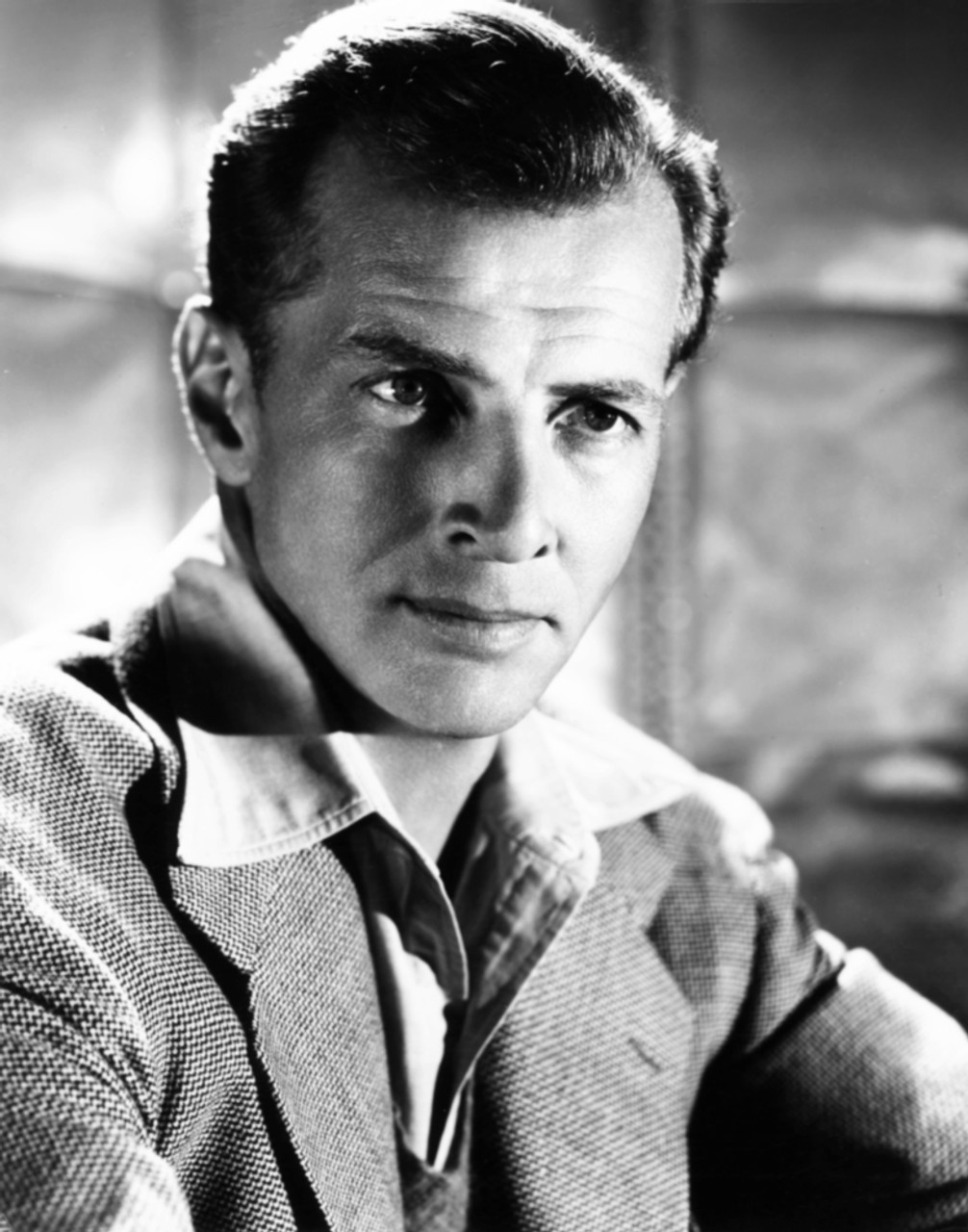
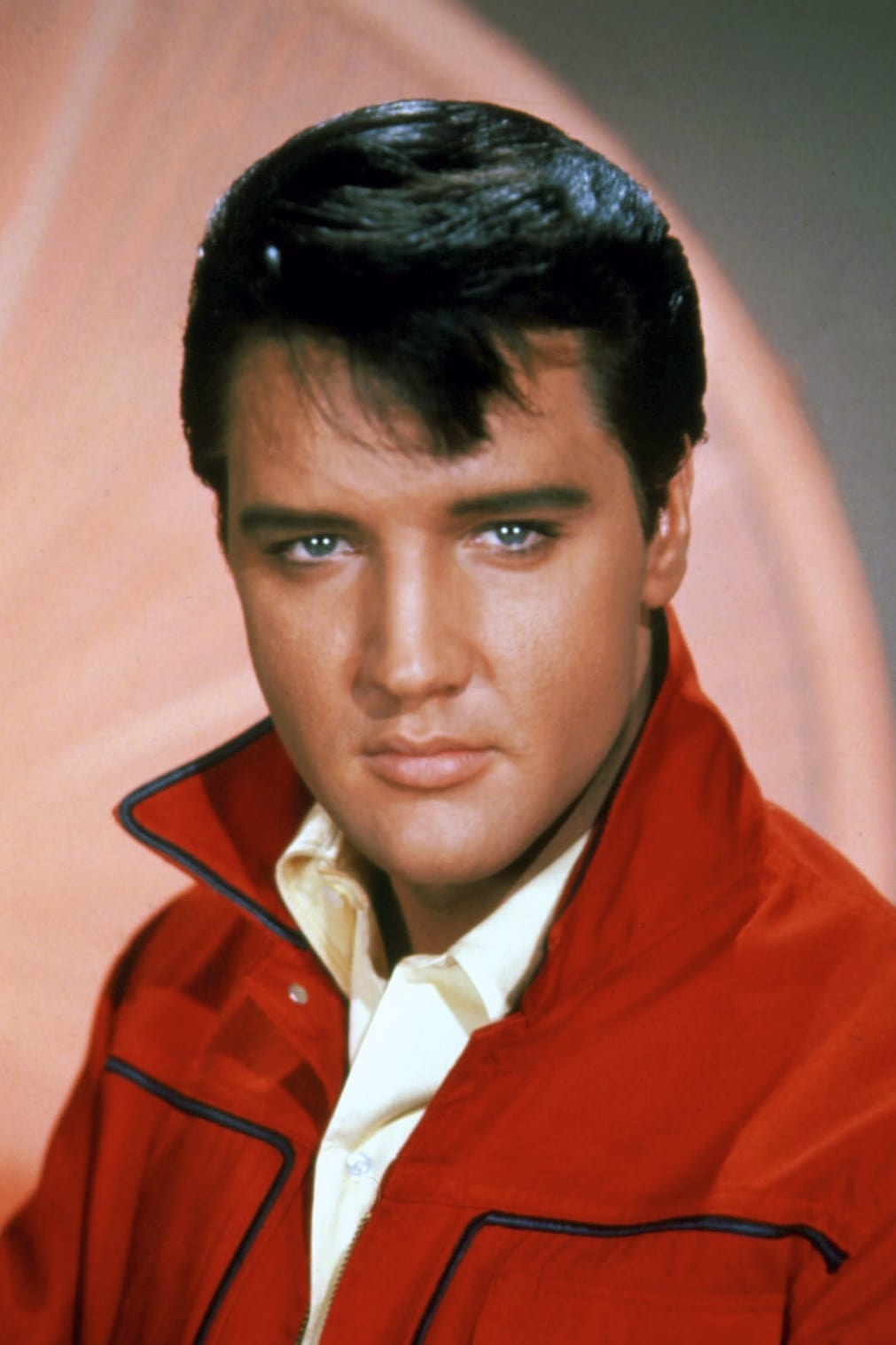
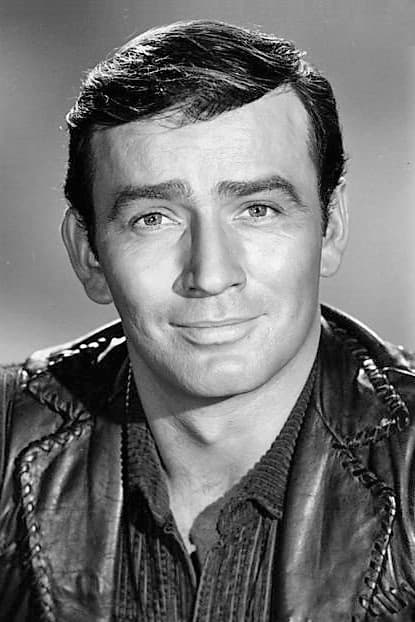
The footage of Elvis Presley singing "Love Me Tender" at the end was shot after preview audiences reacted badly to his character's fate. This new footage created a continuity error, as Elvis had dyed his hair black by the time of the additional shooting, whilst in the movie his hair color was closer to blonde.
Elvis Presley is credited as co-writer of the film's four songs, but in fact had little to do with writing them; it was just for purposes of royalties. Elvis revealed at a 1968 press conference, when asked about his "lack of songwriting in general", that he did contribute one line of lyrics to the title song, "Love Me Tender".
Extra scenes and lines were added for Elvis Presley's character, which was originally supposed to be a minor role before he got the part.
Although originally slated to be an inexpensive "B" picture, it was upgraded to an "A" feature with a $1-million budget after Elvis Presley was signed to star.
Possibly the first American film to use a "squib hit" on an actor (using an explosive under clothing with a blood pack to simulate a bullet hit).
Continuity
Elvis' hair is black during the final "Love Me Tender" reprise, but closer to blonde in the rest of the film.
When the brothers try to coerce the other former soldiers into turning in the money, they disarm the three. As the camera angles switch, one guy has his jacket covering his holster, then it is exposed with the gun still in it, then switches back to being concealed.
Factual errors
The Civil War did not end all at once on April 9, 1865. The surrender and ceasefire on that date applied only to General Robert E. Lee's Confederate Army of Northern Virginia and the Virginia theater of operations. The other large Confederate army, General Joseph E. Johnston's Army of Tennessee, did not surrender until April 26, and smaller elements of Confederates throughout the country (which were incommunicado, such as the cavalry brigade that the Reno brothers belonged to) continued to fight until the news of Johnston's surrender reached them through the slow communications of the day, well into the summer of 1865. (Whilst that fact would not necessarily prevent the charges of robbery leveled by the Federal Government against the Reno brothers, it would make a compelling legal defense for them.)
When Clint goes outside to check on a noise and finds the other soldiers there, the chambers of his gun are empty.
Anachronisms
A Confederate soldier zips up the pants that were taken off Northern soldiers, before zippers were invented.
In the scene where Cathy Reno is at the window crying, a car can be seen in the background.
Vance takes a Smith & Wesson New Model No. 3. from Mr. Siringo, which was not released until 1878.
During the robbery of the payroll train, up the track in the direction of the train's travel, there are modern CTC block signals of the Southern Pacific Railroad which were installed in the 1930s (beyond the siding switch). Centralized Traffic Control for railroads did not exist in 1865, nor did the heavier rail on the right of way shown in the film (at least 100 pounds).
When the locomotive engineer is ordered to halt his train, he applies an air brake. The air brake system was designed and patented by George Westinghouse on April 13, 1869.
Audio/visual unsynchronized
Elvis takes his hands off his guitar during "We're Gonna Move", but the sound of the guitar can still be heard.