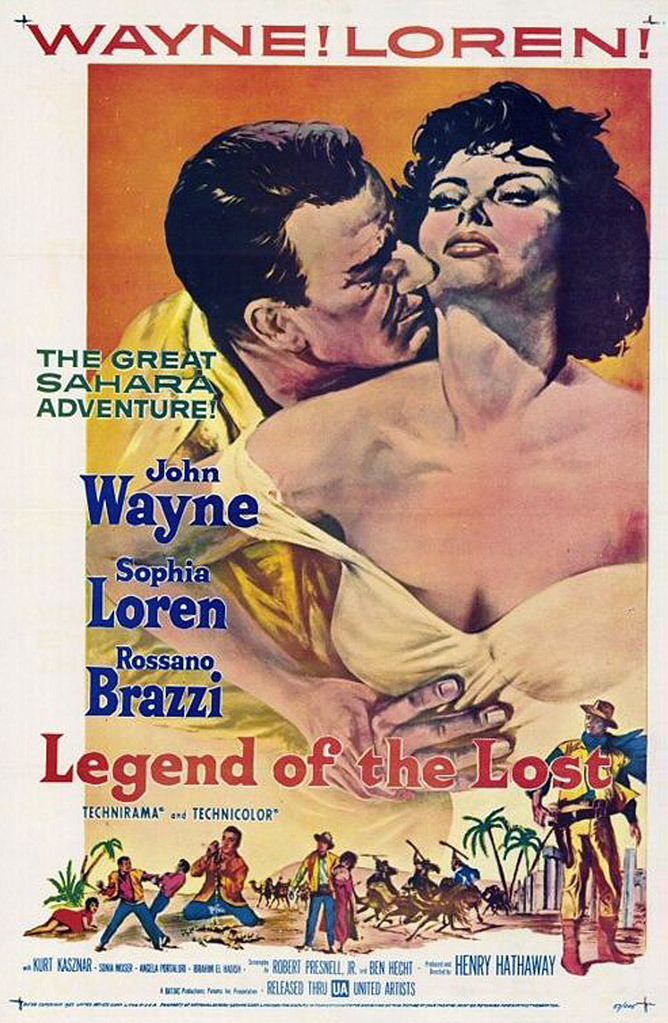
Legend Of The Lost (1957)

Paul Bonnard arrives in Timbuktu in search of a guide to escort him into the Sahara desert. American Joe January takes the job despite misgivings about Bonnard's plans. Dita, a prostitute who has been deeply moved by what appears to be Bonnard's spiritual nature, follows the two men into the desert. Eventually the trio arrives in the ruins of a lost city, where Bonnard hopes to find the treasure his father sought years earlier before disappearing. But what Bonnard finds alters him in unexpected ways, with tragic results.
A Hundred Times He Challenged the Blazing Desert Only to Find That Man's Greatest Adventure Was Still Woman!
Joe January: [referring to the lost city] I've been walkin' around thinkin'. It's a great town for thinkin' - no distractions.
Leptis Magna, Libya
(the lost city of Timgad)
Zliten, Libya
(city of Timbuktu)
Ptolemais, Cyrenaica, Libya
Rebiana Sand Sea, Libya
Libyan Desert, Libya
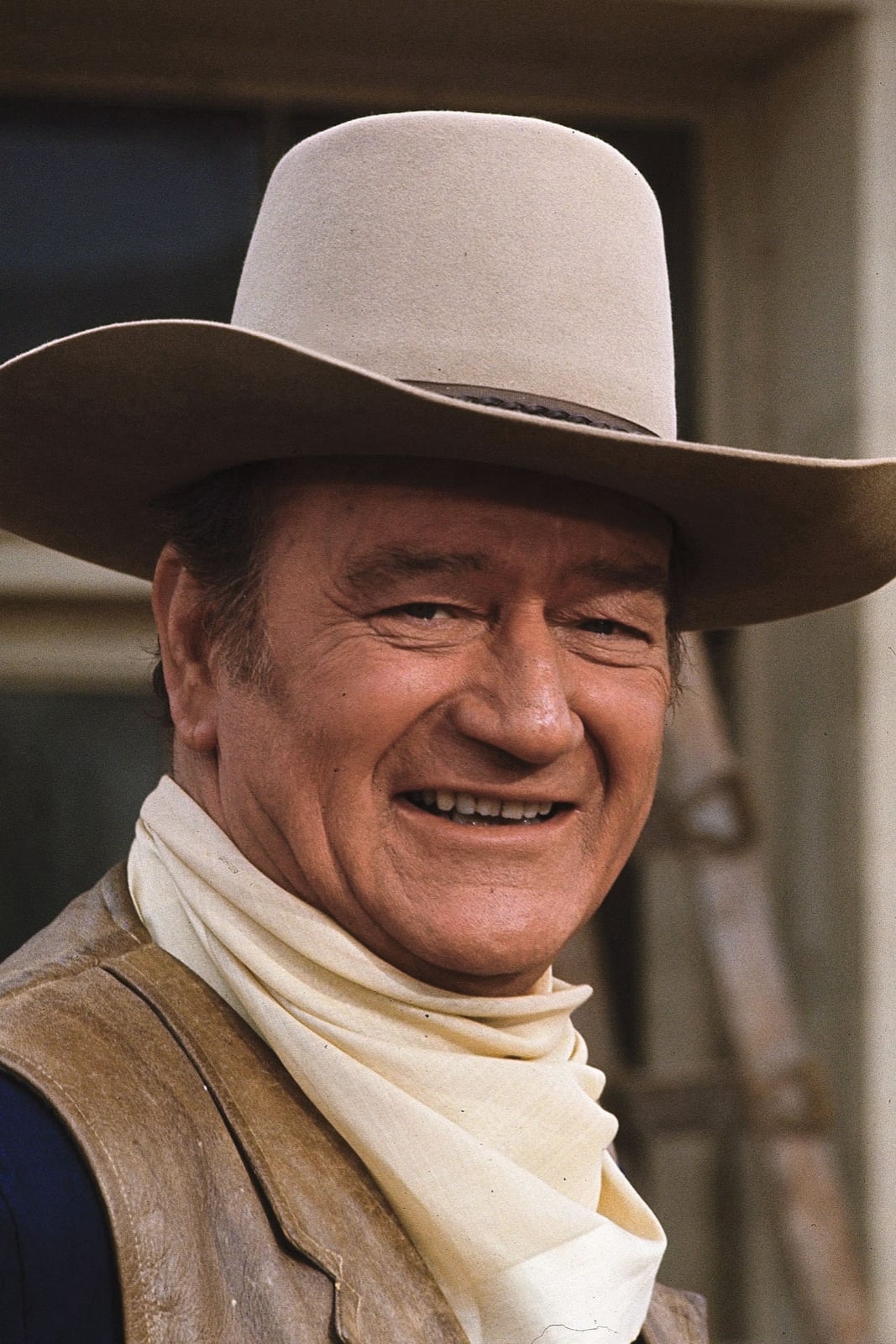
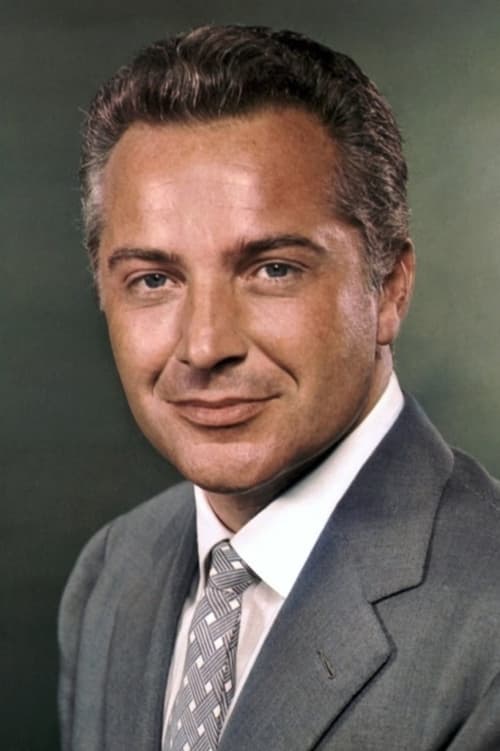
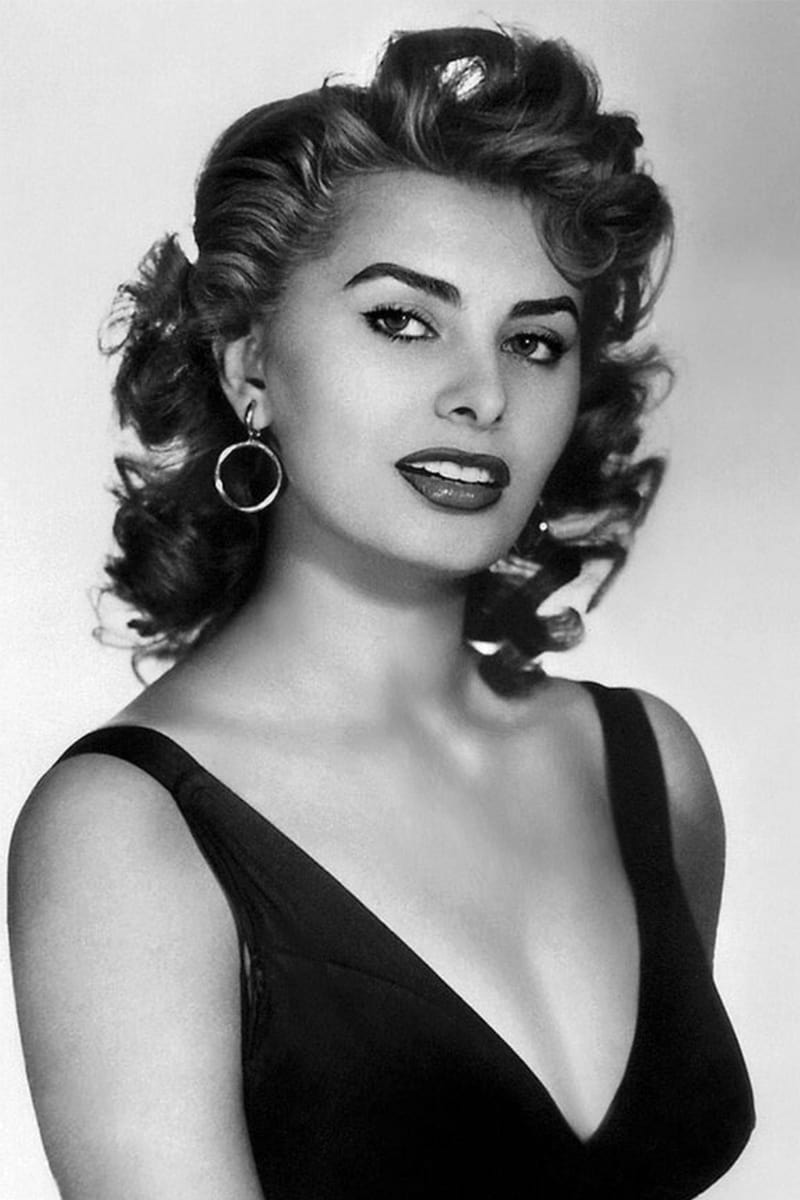
John Wayne broke his leg during filming, causing a three-week delay in the production schedule before shooting resumed in Rome at Cinecitt? Studios, where interior sequences were shot.
The desert scenes were filmed in Libya. The end credits state: "The locations photographed for this film were in the United Kingdom of Libya." The location shooting for Legend of the Lost (1957) took place near Tripoli. The lost city of "Timgad" referred to in the film was the Leptis Magna ruins, a Roman city dating back to the 7th century B.C. near Tripoli, in northwest Libya, while "Timbuktu" was Zliten, Libya. Headquarters for the film were located in Ghadames, where citizens of the villages were employed on set, as well as some native Tuaregs, an ancient desert tribe.
In his autobiography Jack Cardiff recalled that on the first day of shooting John Wayne, who was supposed to be playing a Foreign Legionnaire, arrived on location wearing a cowboy outfit. When he asked director Henry Hathaway why this was, he looked at Cardiff as if he were mad and exclaimed: "He ALWAYS wears the cowboy outfit!"
The Roman ruins where the action takes place are the ancient city of Leptis Magna in Libya, which is not in the middle of the desert, but at the very coast. In fact, the shot where the viewer sees a front view of the Roman theatre doesn't show the building's full height, so as not to reveal the sea in the background.
In a documentary about British director of photography Jack Cardiff, it was said that director Henry Hathaway was not respectful to the English members of the crew. He did not, for example, like their penchant for taking breaks for tea.
Continuity
Sophia Loren's dress appears to variously rip, repair and re-rip itself in various scenes. It had some help. Gaia Romanini (1923-1990) Costume Designer, Costume Department, Production Designer.
Just before Sophia Loren and John Wayne discover the first spot of supplies Bonnard dumped, she unbuttons her embroidered outer blouse. When they start to run towards the supplies, the camera angle shifts to her running towards the camera and the blouse is re-buttoned.
Revealing mistakes
The colony of bats that surprise them at the ruins seem to fly through stone columns and walls or just disappear in mid-air.
Those bats that fly up out of the ground are obviously animated.
Just before Dita dumps out the canteens of remaining water, Joe January says they only have about a pint of water left which is just enough to get back to where they can get more water. Yet once in the ruins, Joe walks up with a bottle of wine or something. Paul Bonnard subsequently breaks it. A little later, Paul is seen with another bottle of wine. So much for not having very much to drink.
Character error
Twice Joe January refers to Solomon and Bathsheba. It should have been Solomon and Sheba. Bathsheba was David's interest. Obvious failure to pay attention in Sunday School.
Dita wears no hat or arm covering during their trek in the Sahara. This would have been fatal.
They refer throughout the movie to the animals they are riding as donkeys, but they are clearly mules. The movie is not explaining the Equine Genome, they're using the word as a generic term. As in: If not horses or camels, they must be donkeys.