
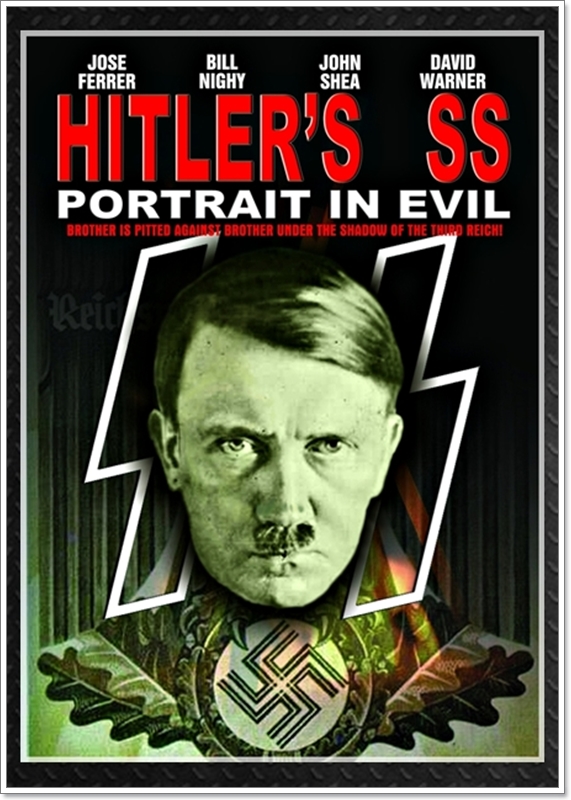
Hitler's SS: Portrait In Evil (1985)

The story of Helmut and Karl Hoffmann. Both come of age at the start of Hitler's power in Germany. Helmut joins the SS and eventually becomes a successful flag rank officer. Karl joins the SA and experiences the darker side of Nazism after the SA is disbanded and Karl is thrown into prison and later conscripted into the German army. Brother is pitted against brother until their relationship, and the Third Reich, stands in ruins.
Brother is pitted against brother under the shadow of the Third Reich.
Karl Hoffmann: Just think if we were asked to observe a minute of silence for all the people we've slaughtered and all the people our friends in the SS have slaughtered. Why, we'd be spending the rest of our lives in total silence!
Germany (West)
England





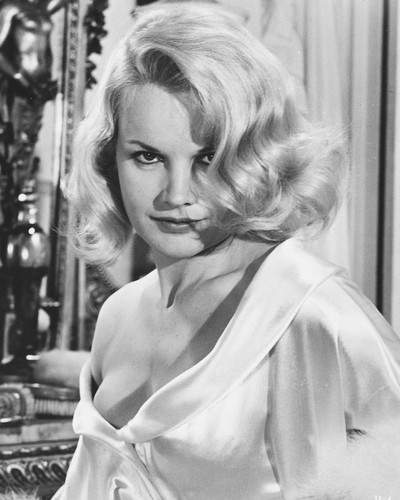
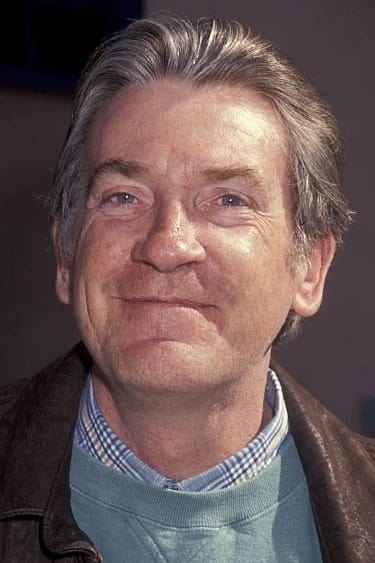
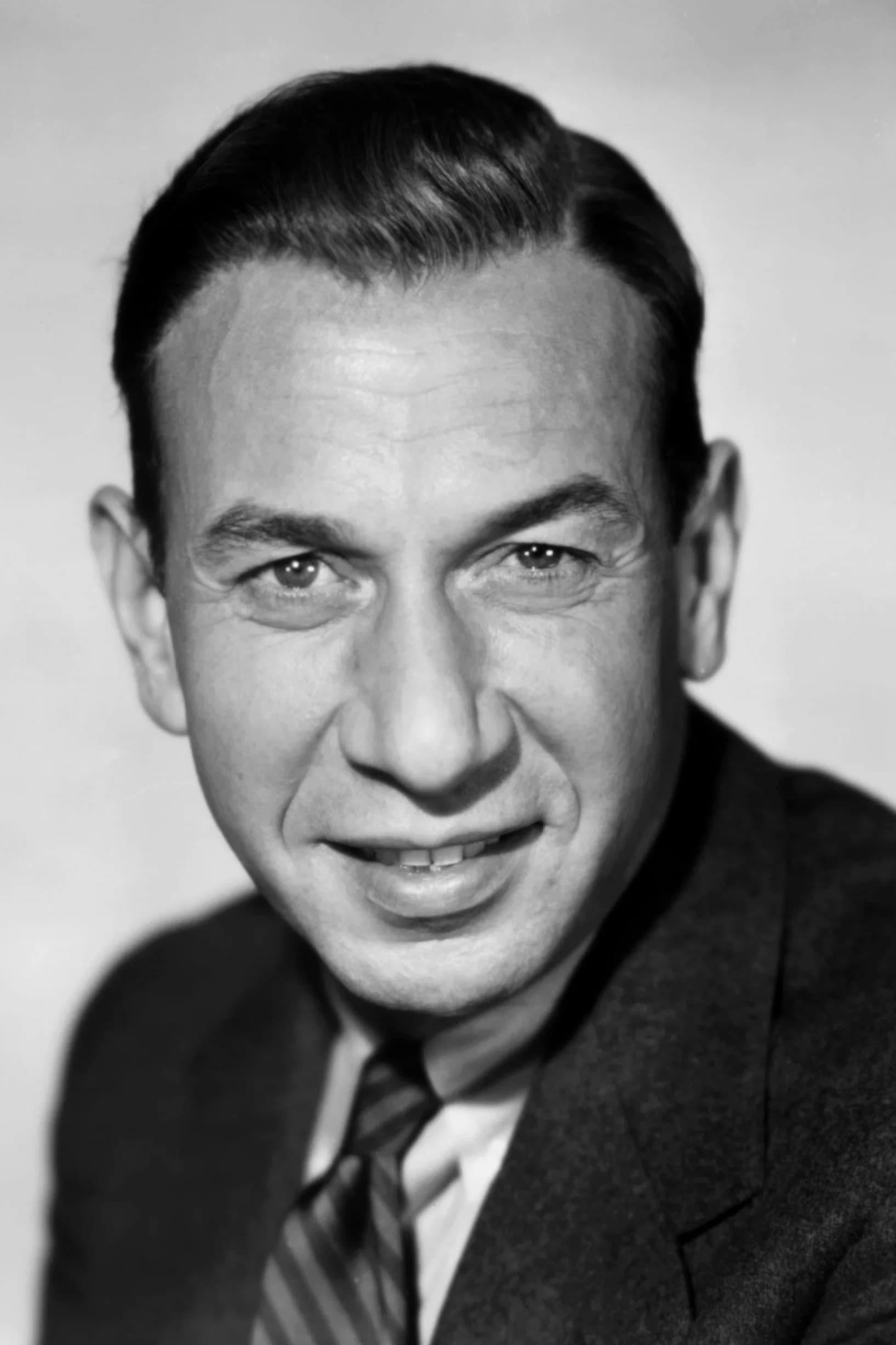
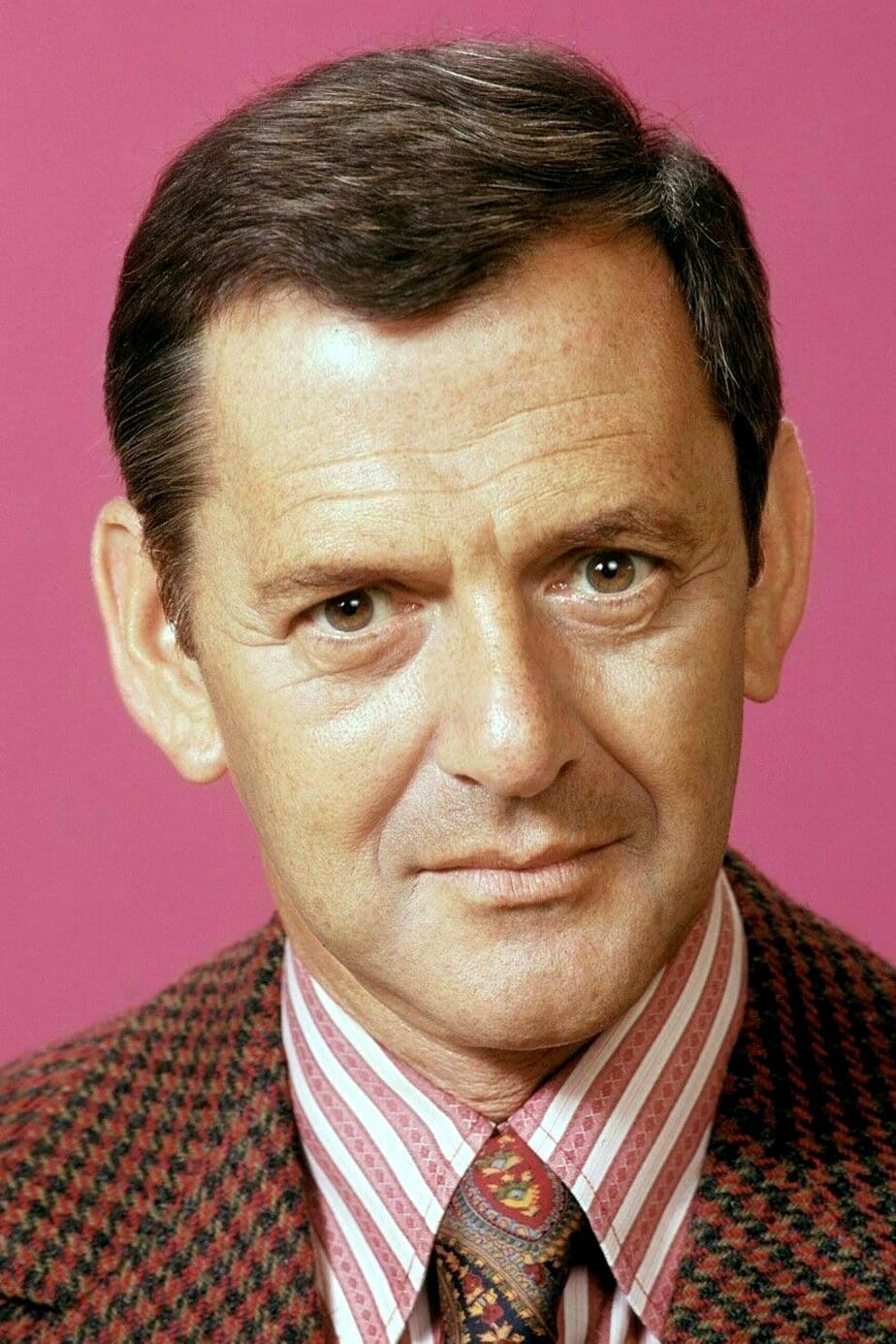
David Warner reprised his role of SS-Obergruppenf?hrer Reinhard Heydrich from Holocaust (1978).
When Reinhard Heydrich leaves Berlin to take up a new posting as Nazi Governor of Bohemia and Moravia (Czechoslovakia), a scene follows where Helmut Hoffmann is told "You'd better hope Himmler has a job for you, or you'll find yourself fighting Russians." This is in reference to the practice of the SS where General-SS members, without active assignments, would transfer to the Waffen-SS as military reservists. Interestingly, in the subsequent scene set a year later after Heydrich's assassination, Helmut is shown wearing a Waffen-SS tunic complete with combat and service awards from the Eastern Front, thus implying that he did find himself fighting Russians.
Commentators and critics of the film have often remarked that it is unclear exactly what Helmutt Hoffman's job is in the SS, apart from delivering things to his superiors for signature, and in only one instance is anyone actually seen working for him. Based on the dialogue, however, Hoffmann appears to be part of the SD Special Purpose Staff which was known as "Amt z.b.V. Besonderen Verwendung"
David Warner did not want to play Heydrich a second time after undergoing emotional distress during the filming of Holocaust (1978) but he needed money for his recently born child so he reluctantly took the job.
In the fall of 1932, when the film depicts the first meeting between Helmut Hoffmann and Reinhard Heydrich, Heydrich was an SS-Standartenf?hrer (Colonel) and had served in the SS for just over a year. Considered rather unimportant by SS leaders, Heydrich would not become well known in the SS until after moving to Berlin and taking over the Gestapo in April of 1934.
Continuity
At the very end of the film, Helmutt meets his brother Karl in a Berlin bar. Karl says, "Bring my friend the Hauptsturmf?hrer a large schnapps!" At this point in the movie, Helmutt holds the SS rank of Oberf?hrer, not Hauptsturmf?hrer.
On the train to murder the SA leadership, a scene shows several enlisted SS members wearing officer uniforms with enlisted insignia.
When Becker (Helmutt Hoffman's friend) begins wearing a Waffen-SS grey uniform, he has the collar insignia of a Hauptsturmf?hrer (Captain) while at the same time wears the shoulder boards of an Obersturmbannf?hrer (Lieutenant Colonel).
Factual errors
In the film, Reinhard Heydrich is shown assassinated on a deserted country road in the farmland outside the city of Prague. In reality, Heydrich was attacked in the middle of the city when his car slowed to round a corner at a busy streetcar station.
Helmut is shown with the SS "Runes" tattooed on his right arm, and tells people every SS man got this. Actually, SS men were not tattooed with the "Runes", but were tattooed with their blood type on their left arm.
When Karl is arrested and sent to Dachau, Helmut approaches Reinhard Heydrich and asks to have Karl released. Karl is then harshly told that release from Dachau is solely at the discretion of the camp commander and that Heydrich is powerless to assist. In reality, it was the Gestapo who decided who would be interned and released from a concentration camp and the camp commanders actually had nothing to do with this process. Therefore it is Heydrich, commander of both the Security Police and Gestapo, who would be exactly the right person to ask for Karl's release.
In early 1933, Helmut Hoffman is shown in Munich waiting for a train to Berlin, in order to take up his new job under Reinhard Heydrich and the SS. Heydrich, however, did not have an office in Berlin until April of 1934, after the SS had gained control of the Gestapo, and in 1933 he was still working out of the Nazi Party headquarters in Munich.
The character of SS-Captain Becker is shown in 1938 to be wearing the World War II Iron Cross Second Class. This decoration was not introduced in the German military until the end of 1939.
Revealing mistakes
Although this is an English Language movie, made for speakers of English, primarily by other speakers of English, some of them mispronounce German words, which real Germans would not do. They refer to Ernst Roehm's surname as sounding like the word Rome, when it in fact is pronounced as like beginning with the letter R, and rhyming with the word perm. In the words Leibstandarte Adolf Hitler, the Old Man's personal bodyguard, the word Leib, which, similarly to the word K?rper, means Body, is not pronounced Leeb, as has been done in other films set at the time, but as Libe.
Anachronisms
In 1944, the SS officer Becker appears as a Waffen-SS Colonel wearing the same uniform from the 1930s with no additional awards or decorations. As a front line officer in the Waffen-SS, it would be highly unusual for Becker to have earned no further awards during the Second World War and even stranger to not display even the basic campaign medals for which his service surely would have warranted.
In long shots of the Sturmabteilung headquarters, the first car from the left parked in front is a Mercedes-Benz built in the early 1950s.
Character error
When Helmut arrives home on leave towards the middle of the series, his younger brother Hans points to Helmut's Security Service (SD) sleeve patch and exclaims "You've been promoted!" The SD sleeve patch actually had nothing to do with rank, and simply indicated an SS member was assigned to the SD.
In all the scenes featuring Heinrich Himmler, Himmler is shown as stern and militaristic, requiring others to stand at attention when they address him and speaking in a harsh disciplinarian manner. This is completely contrary to Himmler's actual character, who conducted himself (with a few exceptions) in a friendly manner around most members of the SS, mostly out of a sense of comradeship and a feeling that the SS was a brotherhood of Germanic men. In most newsreels showing Himmler around other members of the SS, he is frequently shown smiling and in casual conversation, rarely appearing before others as an authoritarian figure.
At the start of World War II in September 1939, Reinhard Heydrich is show with the rank of SS-Obergruppenfuhrer as well as the award of the Iron Cross First Class. Heydrich did not hold either this rank or award until after 1941.