The Godfather III (1990)

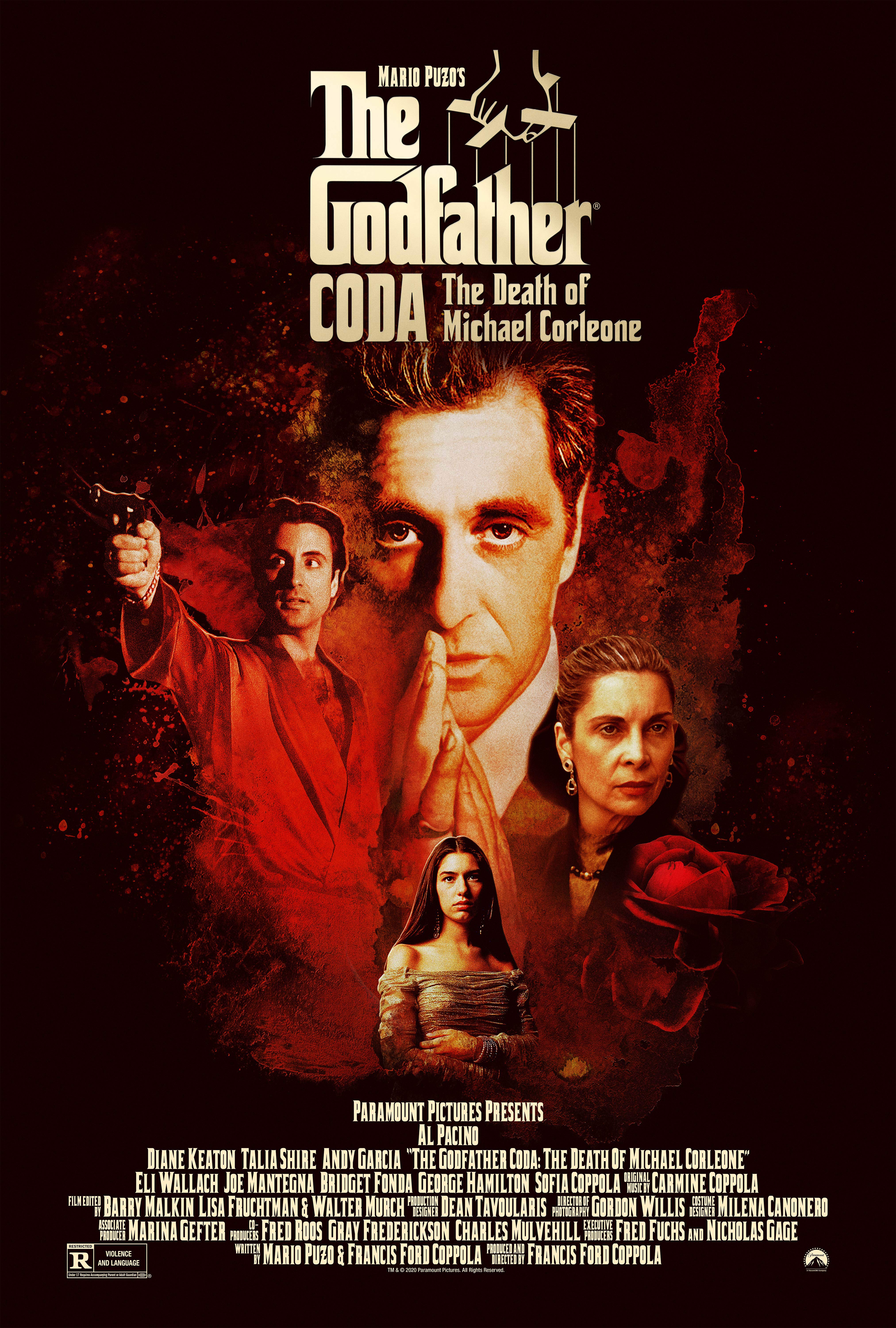
After a break of more than 15 years, director Francis Ford Coppola and writer Mario Puzo returned to the well for this third and final story of the fictional Corleone crime family. Two decades have passed, and crime kingpin Michael Corleone (Al Pacino), now divorced from his wife Kay (Diane Keaton), has nearly succeeded in keeping his promise that his family would one day be "completely legitimate." A philanthropist devoted to public service, Michael is in the news as the recipient of a special award from the Pope for his good works, a controversial move given his checkered past. Determined to buy redemption, Michael and his lawyer B.J. (George Hamilton) are working on a complicated but legal deal to bail the Vatican out of looming financial troubles that will ultimately reap billions and put Michael on the world stage as a major financial player. However, trouble looms in several forms: The press is hostile to his intentions. Michael is in failing health and suffers a mild diabetic stroke. Stylish mob underling Joey Zaza (Joe Mantegna) is muscling into the Corleone turf. "The Commission" of Mafia families, represented by patriarch Altobello (Eli Wallach) doesn't want to let their cash cow Corleone out of the Mafia, though he has made a generous financial offer in exchange for his release from la cosa nostra. And then there's Vincent Mancini (Andy Garcia), the illegitimate and equally temperamental son of Michael's long-dead brother Sonny. Vincent desperately wants in to the family (both literally and figuratively), and at the urging of his sister Connie (Talia Shire), Michael welcomes the young man and allows him to adopt the Corleone name. However, a flirtatious attraction between Vincent and his cousin, Michael's na?ve daughter Mary (Sofia Coppola) develops, and threatens to develop into a full-fledged romance and undo the godfather's future plans.
All the power on earth can't change destiny.
Michael Corleone: Just when I thought I was out... they pull me back in.
Atlantic City, New Jersey, USA
Cinecitt? Studios, Cinecitt?, Rome, Lazio, Italy
(studio)
Elizabeth Street, Lower East Side, Manhattan, New York City, New York, USA
(Joey Zaza's assassination)
Forza d'Agr?, Messina, Sicily, Italy
Little Italy, Manhattan, New York City, New York, USA
Lower East Side, Manhattan, New York City, New York, USA
Mare Chiaro bar "Toni's nut house", 179 Mulberry street, Little Italy, Manhattan, New York City, New York, USA
(Actual owner Toni sat in background smoking cigar as always..)
Palermo, Sicily, Italy
Park Avenue, Manhattan, New York City, New York, USA
Rome, Lazio, Italy
St. Peter's Cathedral, Vatican City
Teatro Massimo, Palermo, Sicily, Italy
(opera sequence, exterior and entrance)
Trump Castle Casino Resort - Huron & Brigantine Boulevard, Atlantic City, New Jersey, USA
Waldorf-Astoria Hotel - 301 Park Avenue, Manhattan, New York City, New York, USA
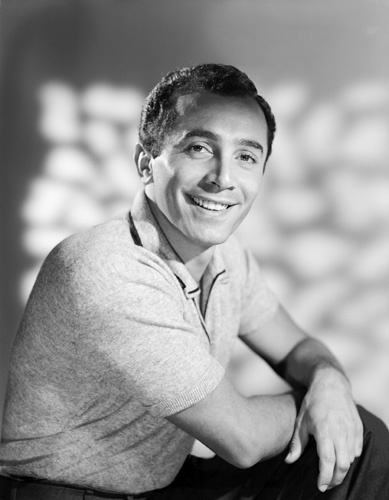
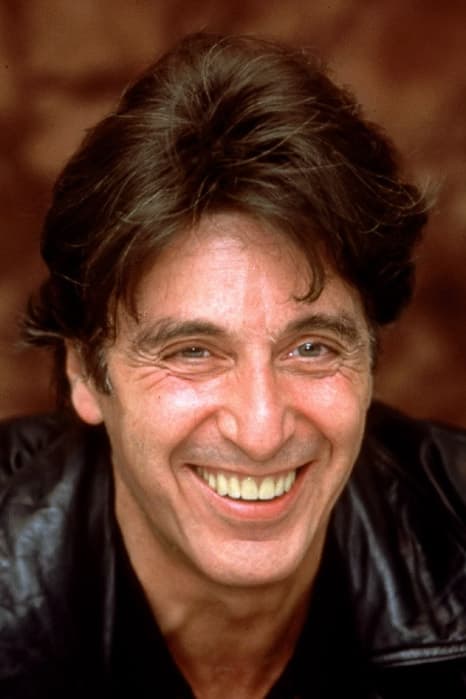
Sofia Coppola (daughter of director Francis Ford Coppola), plays Michael Corleone's daughter, despite playing his nephew [sic] as an infant in The Godfather (1972). Winona Ryder was originally cast, but she withdrew so that she could act in Edward Scissorhands (1990).
The initial draft for this film had Tom Hagen in it. However, 'Robert Duvall (I)' refused to play his role due to contract disagreements with Paramount. As a result, the character B.J. Harrison was rewritten as a Hagen-like character.
'Robert Duvall (I)' wanted $5 million to reprise his role as Tom Hagen in this film. They turned him down and the part was recast and altered for George Hamilton to play the new lawyer character B.J. Harrison. A line of dialogue now says that Hagen died years before.
The film was made in part to address the financial problems that Zoetrope Studios had incurred as a result of the failure of Tucker: The Man and His Dream (1988).
The first song played by the band at Michael Corleone's party following the church ceremony is "Cuban Rhapsody," the same melody sung by "Yolanda," the entertainer in the New Year's Eve nightclub scene in The Godfather: Part II (1974).
The twin girls with long dark hair at Michael's party are Sonny's daughters, Kathryn and Francesca. They were also depicted in The Godfather (1972) and The Godfather: Part II (1974).
Sofia Coppola's character's aunt is played by her actual aunt, Talia Shire.
Al Pacino was offered $5 million but wanted $7 million plus profits from gross to reprise his role as Michael. Coppola refused, and threatened to rewrite the script by starting off with Michael's funeral sequence instead of the film's introduction. Pacino agreed to the $5-million offer.
Catherine Scorsese, Martin Scorsese's mother, is one of the women that stops Vincent to complain about the poor care of the neighborhood.
Robert De Niro lobbied for the role of Vincent Mancini. Director Francis Ford Coppola considered it, which would have included aging Al Pacino's Michael Corleone even more, but eventually decided against the idea.
Paramount tried to go ahead with the film for many years without Francis Ford Coppola who had refused to make another sequel. About twelve scripts were written. Most of the scripts included the Corleone family being led by Michael's son Anthony, battling the CIA, Castro's Cuban government, or South American drug cartels. A 1978 draft by Mario Puzo dealt with Anthony Corleone being recruited by the CIA to assassinate a Latin American dictator. Dean Riesner also wrote a draft based on Puzo's ideas. Drafts were also written by Paramount producers Michael Eisner and Don Simpson. The film was scheduled for a Christmas 1980 release date. These scripts were discarded when Coppola decided to work on the script with Puzo. But Coppola eventually abandoned the project. Puzo wrote another script in 1986 with producer Nicholas Gage that featured Sonny Corleone's illegitimate son Vincent Mancini while showing the early life of the young Sonny Corleone. Paramount considered directors Martin Scorsese, Sidney Lumet, 'Costa-Gavras', Alan J. Pakula, Robert Benton, Michael Cimino and Michael Mann. At one point they were even close to signing Sylvester Stallone to direct and star in the film.
Francis Ford Coppola lobbied intensely for the film to be called 'The Death of Michael Corleone' rather than 'The Godfather Part III' but in the end was overruled by the studio. However, when the film was released on DVD, the penultimate chapter was called 'The Death of Michael Corleone'.
Michael Corleone's funeral was written and rehearsed, but not shot.
The character of Joey Zasa was based on two mob kingpins oft he '60s and early '70s. One was Joe Colombo, who organized the Italian-American Civil Rights League, which publicly opposed FBI investigations into the mob, embarrassed others in the Cosa Nostra by keeping a high public profile and was shot at in New York's Columbus Circle (though he didn't die until several years later) during a rally by his organization. The other is Joe Gallo, who organized the hit on Colombo, he was known (and reviled by other mobsters) for recruiting blacks and Hispanics to his crew and hung out with Hollywood celebrities.
The film is partly based on the findings of David Yallop's book "In God's name" first published 1984. The book is about the "30-day pope" John Paul I, who is also in the film.
Rebecca Schaeffer was in the running to play Mary Corleone, but was murdered just before discussions were to start. Winona Ryder was later cast in the part, which was ultimately played by Sofia Coppola.
Joe Spinell, who played Willi Cicci in Parts I and II, was to have reprised his role but died before production was to begin. An earlier version of the script had Cicci working for new characters, the Russo Brothers. The three characters were eventually combined into Joey Zasa.
Corrado Gaipa, who played Don Tommasino, was to reprise his role but died before production began. Coppola, working on the assumption that no one would remember Gaipa's character, hired another actor, Vittorio Duse, to play Don Tommasino.
When the movie was first released on VHS in 1991, the tapes were colored gold.
Because of the popularity of the two earlier Godfather movies, Frank Sinatra reversed his anti-Godfather stance and expressed interest in playing Don Altobello. He lost interest because of the size of the paycheck for the role, and it went to Eli Wallach. Sinatra got his role in From Here to Eternity (1953) when Wallach backed out because of the low pay for that movie.
When Andy Garcia filmed his fight scene, he insisted on beating the stuntman with a real pistol instead of a prop pistol. This resulted in the stuntman suffering a cut that required stitches.
Archbishop Gilday's full name is Liam Francis Gilday.
Most of the rogue characters are based on the key players of the 30-Day Pope conspiracy. Kenzig the banker was based on Roberto Calvi, managing director of the Bank of Milan who was found hanged in London in June 19 1982 for allegedly involved in missing Vatican funds amounting $1.25 billion. Lucchesi was based on Giulio Andreotti, an Italian politician. Gilday was based on Paul Marcinkus, a one time director of the Vatican Bank currently remained silent over the conspiracy.
Francis Ford Coppola did this movie as part of dealing with his personal and studio financial problems. Paramount approved this film with a $56 million budget under strict conditions that he was given $1 million for the writer-producer-director fee, the final cut of the film must not be less than 140 minutes and any additional expenses would not be covered by the studio.
The music that's played during the closing scene and credits is Pietro Mascagni's Intermezzo Sinfonico from "Cavalleria Rusticana". It is also known for its appearance in Raging Bull (1980).
Francis Ford Coppola said that in the final sequence, Michael's outcry was almost completely cut out due to its agonizing sound.
Early in the film Joey Zasa presents Michael Corleone with the "Italian of the Year" award, for which he personally recommended him. This is a reference to James Caan receiving the actual award in 1973 for his portrayal of Santino 'Sonny' Corleone in the original film.
The license plate on the Cadillac Joey Zasa is auctioning away is "MEUCCI".
Originally, the script was to center around Tom and Michael. Tom was going to be an informant. When Duvall got the script, he realized his character was the second lead, yet the studio was offering the same amount of money as he took for the last film (around 1/9 the money all the other principals received). Duvall counter offered through Coppola to Paramount. Paramount denied offering more money and told Coppola to re-write the script without Tom. This version that was changed was the only one to feature Michael dying in a car accident at the end of the film.
Joey Zasa is named after Coppola's maternal grandmother whose maiden name was Zasa. Lou Pennino is named after Coppola's grandfather, Francesco Pennino.
Actors competing for the role of Vincent Mancini, according to Francis Ford Coppola, included: Alec Baldwin, Matt Dillon, Vincent Spano, Val Kilmer, Charlie Sheen, Billy Zane and Nicolas Cage. Julia Roberts was Coppola's dream choice for Mary Corleone, but she had scheduling conflicts at both times when the role was open. Madonna campaigned for the role of Mary Corleone, and had a meeting with Coppola and Robert De Niro to discuss how to adapt the role to their ages. In real life, Madonna is only 12 years younger than Diane Keaton who plays Mary Corleone's mother.
Coppola wanted Gastone Moschin, who played Don Fanucci in The Godfather: Part II (1974), to play a different role in this film. But Moschin was unavailable at the time.
According to Peter Biskind's book "The Godfather Companion," a 1985 script co-written by Thomas Lee Wright and Nick Marino, included a character based on drug lord Leroy 'Nicky' Barnes. When the script was briefly considered, Wright persuaded Eddie Murphy to take the role. Murphy reportedly said, "I would act in The Godfather for nothing."
Although Altobello's first name is not revealed here, in the book 'The Godfather Returns' by Mark Winegardner, his first name is Oswaldo.
Filmed in 125 days between November 27, 1989 and May 25, 1990.
Francis Ford Coppola once admitted that he was still unhappy over the final result because of lack of time on working with the script. According to him, he wanted $6 million for the writer, producer, director fee with six months work on the scriptwriting. The studio instead gave him only $1 million in fees and 6 weeks to work on the script in order to meet the Christmas 1990 release.
For her widely panned performance in this film, Sofia Coppola not only "won" two RAZZIE Awards (for Worst Supporting Actress and Worst New Star) but also set a new record for the percentage of votes received by any actor up to that point in Golden Raspberry Awards history. In a field of five contenders, she took over 65% of RAZZIE members' votes in both categories.
Continuity
Near the end, when the hit man is assembling his rifle, he mounts the scope backwards. Later in the film it is on in the correct direction.
During the hit by helicopter in the Atlantic City hotel, Al Neri helps Michael and Vincent escape, but in the next scene, when Vincent hot-wires the limo and drives Michael away, Al is not with them.
When Kay is on the steps about to get into the car in Sicily, Michael can be seen removing his cap through the windshield. Then, after she gets into the car, Michael turns around and again removes his cap.
In The Godfather Part II (1974) the car that Anthony drew for Michael is gray while in Part III it is red.
At the beginning of the movie Vincent gets in a scuffle with security at the party being held for Michael. Vincent's coat gets knocked off his arm but in the next shot it's there again. This happens a few times and when Vincent walks away the coat is back on his arm.
Factual errors
When Cardinal Lamberto hears Michael Corleone's confession, he is not wearing the purple stole all priests wear during the sacrament. There is no reason why he wouldn't have one, since all priests carry one on their person at all times in case of emergency (such as giving absolution during last rites).
The Opera Cavalleria Rusticana is shown out of chronological order. The prologue is shown first (Anthony singing backstage), followed by a scene near the end. The procession scene shown next, is actually in the middle of the opera. Then the conclusion is shown.
In the Opera some scenes take place in an empty box with unused stacked chairs. In a presumably sold out show there would be no unused boxes and even if so, the box would have been prepared, because it can be looked over by the boxes on the other side, as we see the boxes with the audience.
One of the newspapers headlining the executions is dated "Wednesday November 15 1979". November 15, 1979 was a Thursday.
A newspaper is dated "Friday March 27, 1980". March 27, 1980 was a Thursday.
Incorrectly regarded as goofs
Although the details of Pope John Paul I and his death in the film are not always consistent with those of the real Pope John Paul I, this is not a factual error, as this film is only presenting a fictional story partially (and loosely) based on true events.
The name of the new Pope was John Paul, not John Paul the First, as to name him so would be to tell the future. He is incorrectly referred to in dialogue and in the NYT story title. Nevertheless, when he was elected Pope, he named himself John Paul I, in order that he not be given the numerated double name John XXIV Paul VII. And this was reported in the world's newspapers such as the New York Times.
When Corleone allows himself to be shaved a towel is placed over his left shoulder. A second later it is shown on his right shoulder. However when the towel is placed on his shoulder he is seen reflected in his shaving mirror and the shot switches to a non-reflected shot so it is actually on his right shoulder to start with.
When Michael's daughter runs away due to her father's advice to quit her relation with Vincent, Tony tries to soften the situation by saying what sounds like "She'll understand about Joey", which makes no sense in this context. He is in fact saying "She'll understand eventually", which is confirmed by the subtitles.
Revealing mistakes
When the assassins find Frederick Keinszig and begin to subdue him; he reaches for his gun on top of the table of stolen money. As he struggles, one of the top bills gets moved to reveal that the stacks of money are mostly just blank pieces of paper.
Many times newspaper headlines are shown describing events in the film. However, the clearly legible articles underneath the headlines are obviously unrelated to the headlines. In one case, a WSJ headline "article" appears to have been lifted directly from a computer instruction manual!
The scenes where Michael advises his daughter Mary against seeing Vincent, and the one where he gives Anthony the car drawing are not in sequence. That is noticeable because Anthony and Michael are wearing the same clothes and in the first scene (with Mary) Anthony has the car drawing in his hand. Also in the second scene, Mary's flowers briefly pop into frame.
In the very last scene, Micheal passes away and falls off his chair. He instinctively moves his arm to brace himself, despite having just died.
Miscellaneous
The drawing which Michael shows to Anthony (1:52:17) is not the same drawing used in The Godfather II (0:35:00). Both are drawings of Michael sitting in a car, but definitely not the same.
During the helicopter hit scene, one of the dons is shown trying to get his overcoat from the hook, shouting "It's my lucky coat!", but he cannot get it free. If you watch in slow motion or frame by frame, you can see that one of the squibs on his back goes off early. A few seconds later, he is shown pulling his coat again, and only then, he is actually shot.
Mary walks backwards, taking multiple photographs as she continues to move. The only way to avoid completely blurry images would be to use a high-speed film with a fast shutter speed. As this is a very sunny day, she would not load her camera with such film.
Anachronisms
In the first "overview" shot of New York City at the beginning of the film, the World Financial Center is shown. Construction of the complex began in 1981 and was not finished until 1987.
A chart showing the strength of the British pound over the years 1988-1990 is shown in one of the newspapers dated 1980.
The opening of the film indicates that we are in 1979, but Pope Paul VI and Pope John Paul I, who are still alive at that point in the story, both died in 1978.
The clothes worn by some characters, notably Mary and Kay, are clearly fashions created in the late 1980s.
When the Corleone family moves to Sicily, one white car license plate can be seen. This color was not used in Italy before 1988.
Audio/visual unsynchronized
There is a band playing in the town square in Sicily while Corleone and Kay are talking. The cymbal player is careful to ensure that the plates don't actually meet.
At the opera house, Vincent is heard yelling while his mouth is not moving.
At the beginning of the last (wide) shot of the meeting with Don Tommasino in Sicily, Vincent can be seen speaking to Michael Corleone while the latter gets up, but nothing is heard.
When Vincent and Grace are in bed together at Vincent's apartment, Vincent is alerted to the presence of the two hit men by a noise somewhere in the apartment. Grace asks him "Do you have a cat?" but her mouth never moves.
Errors in geography
When Michael arrives to Sicily, the caption says "Bagheria" and it's shown a Greek temple, but there are no Greek temples in Bagheria.
Plot holes
In an early scene, in Michael's office, a picture can be seen of Vito and Michael, from the scene in the first movie, where Michael and Vito are talking privately about the upcoming Barzini meeting. There was nobody else there, so who took that closeup picture that's now framed on the wall?
Character error
Pope John Paul I is addressed by a servant as "Your Eminence". The Pope's proper title is "Your Holiness".
Vincent points out to his cousin that Vito Corleone started as a lowly delivery boy at the Genco Olive Oil Company. In fact, Vito was its founder. It is possible, however, that Vincent was thinking of Vito's tenure at the Abbandando Grocery Store, where he in fact was a delivery boy. It was where he met his friend and future partner Genco Abbandando, after whom their joint venture was named.
There are numerous errors in the use of Latin by priests in the film. In Saint Patrick's where Michael Corleone is honored by the Church, the presiding clergyman pronounces the Latin word et ("and") as "ay", rhyming with "day", as if it were French. It is in fact pronounced like it is spelled, to rhyme with "wet" and "pet". Later, when Cardinal Lamberto (later Pope John Paul I) absolves Michael Corleone, he ends with the standard "in the name of the Father," etc., in Latin. But he wraps it up saying "et Sp?ritus S?nctus". The correct Latin is "et Sp?rit?s S?nct?"". But Spiritus here is not a nominative, it is the genitive (possessive) singular (Sp?rit?s) of a fourth declension noun (Sp?ritus), and the correct form of the adjective here is S?nct?. Of course, these very mistakes won't be noticed by many viewers, but they will be noticed by anybody who took first year Latin and/or had any training in the Church.
Although the character played by Franco Citti in this movie, and in The Godfather (1972) Part I, is named "Cal?"", Michael Corleone always calls him "Carlo".
In the German dubbed version Vincent several times refers to Mary as his cousin in Italian. He mispronounces the word 'cugina' (cousin) as 'cucina' (kitchen), though.