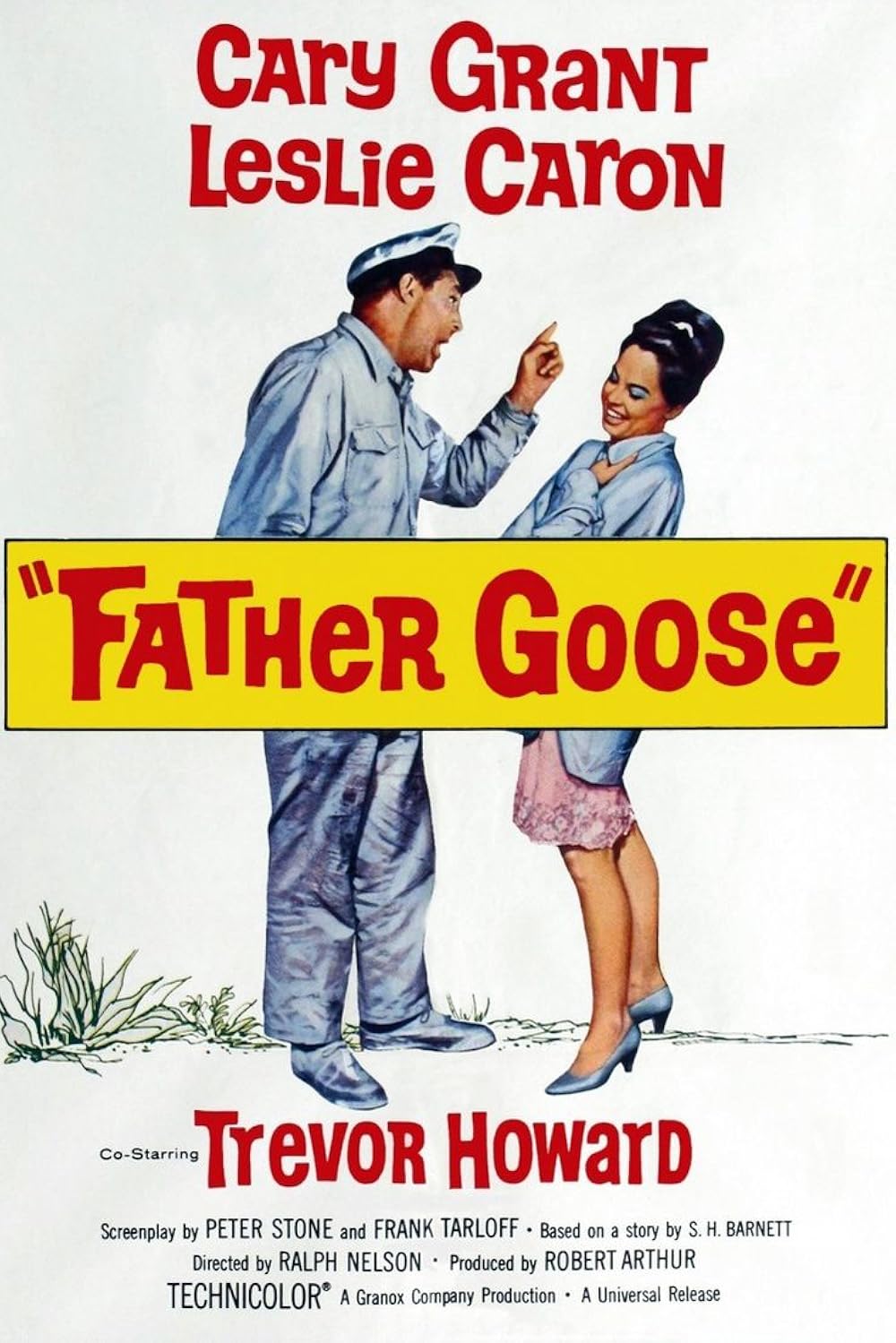
Father Goose (1964)

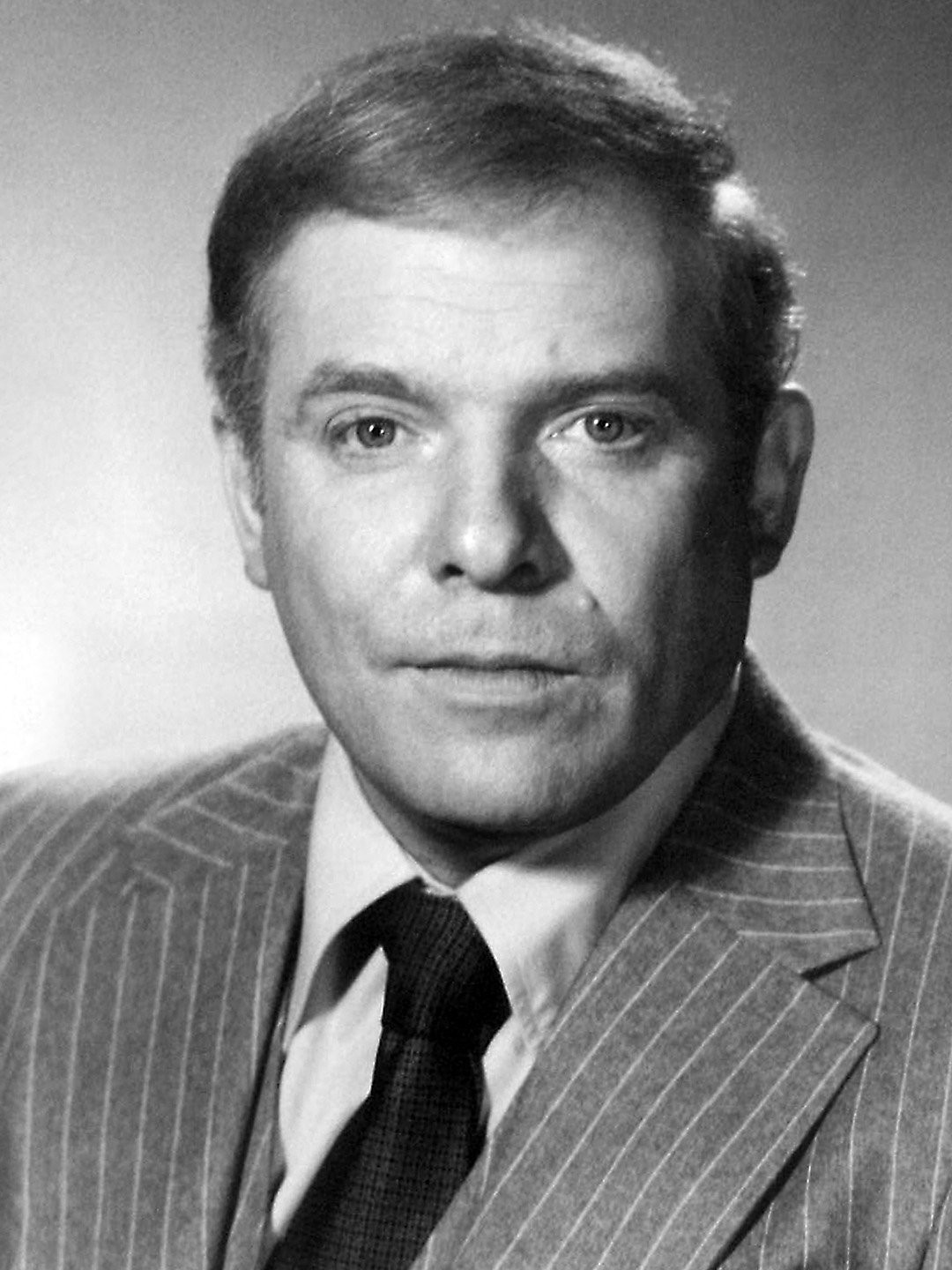
Deliberately casting his established screen image to the four winds, Cary Grant plays Walter Eckland, an unkempt, uncouth and unshaven beach bum in Father Goose. During World War II, Walter keeps busy relaying radio reports of Japanese air activity. But he's no hero, and in fact volunteered for this mission only because he's been promised a shipment of liquor by Australian naval officer Frank Houghton (Trevor Howard). Making matters worse for the misanthropic Eckland is the arrival of French schoolmistress Catherine Freneau (Leslie Caron) and her seven little-girl charges, whose plane has crashed nearby. The animosity between Walter and Catherine erupts into a slapping contest, with Walter dishing it out as well as taking it. Only when Catherine is bitten by a deadly snake does Walter express his affections for her.
They're sharing a South Sea island with 7 little chaperones...and the Pacific as their battleground!
Walter Eckland: So far you've shared me out of my clothes, my food and my house. Now, how about sharing some of my things with me.
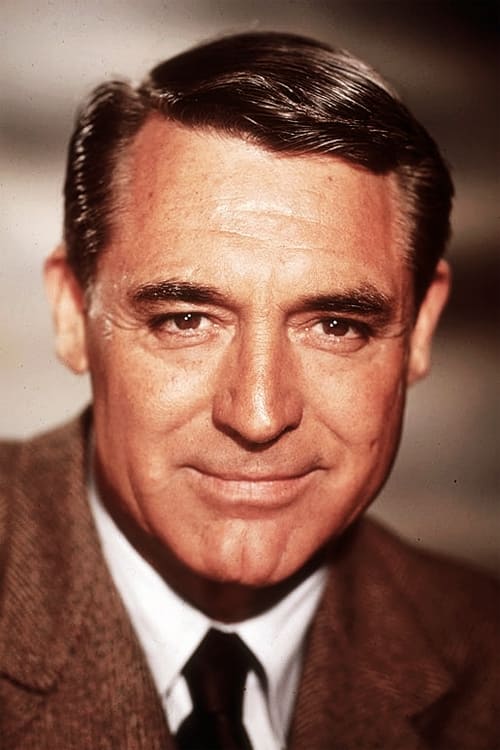
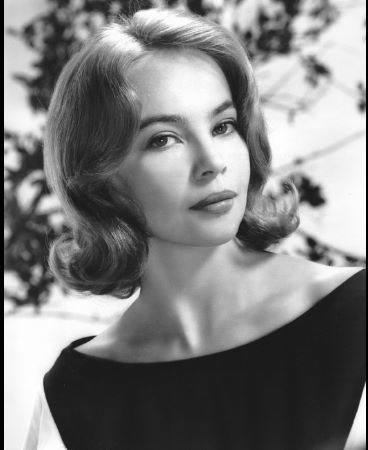
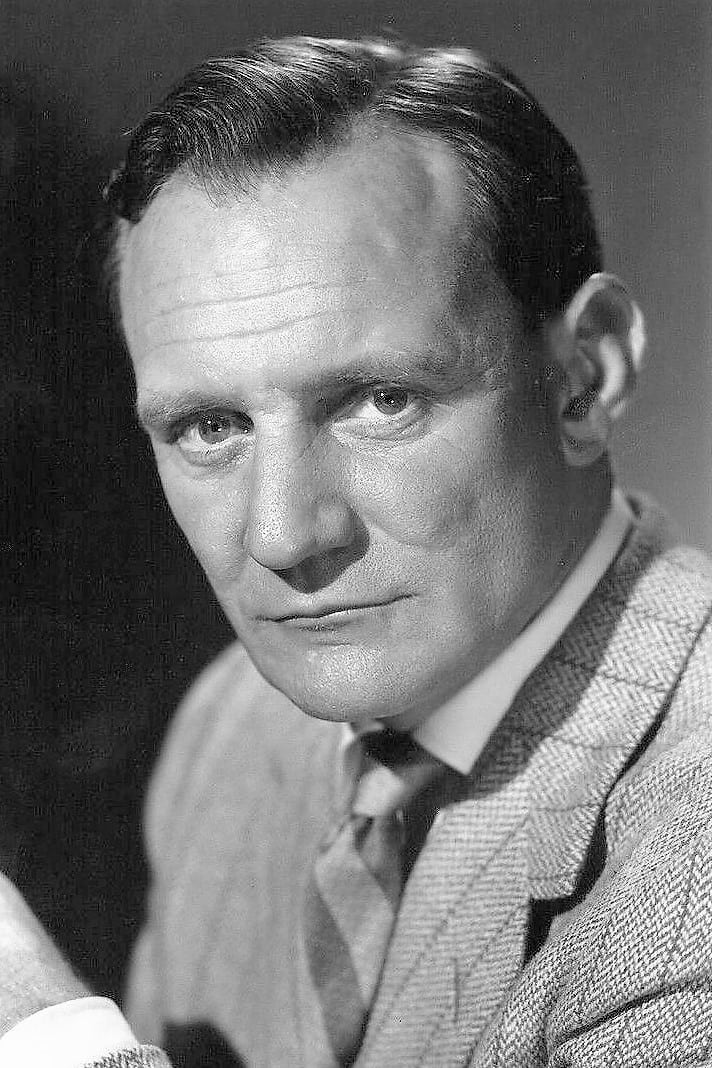
In later years, Cary Grant always claimed his role in this film was most like his real personality. He claimed he kept in touch with most of the girls as they grew up and had families of their own.
Cary Grant was offered the role of Henry Higgins in My Fair Lady (1964) but turned it down to star in this movie. He wanted Audrey Hepburn to play Catherine, but she was already committed to My Fair Lady (1964).
Walter's boat, which he bought from one Mr. Van De Hoven, is named "Vrolijkheid", which is Dutch for "Cheerfulness".
The film features the same piece of stock footage of a submarine firing a torpedo that was used in Cary Grant's previous World War II comedy Operation Petticoat (1959).
Continuity
When Catherine goes into Walter's boat, the water level is very high. When the children go in, there is hardly any water on the floor.
When Walter gets ready to take a nap, he removes his left shoe twice.
When Walter gets an answer on the radio about Catherine's snakebite, Walter is told to plug in the headphones. Throughout the rest of movie, the headphone plug is still plugged in and all voices are heard through the speaker.
When Walter originally arrives in the harbor, he tows the dinghy. While tied alongside the dock, the line tied to the dinghy is gone.
When Catherine goes into the boat to steal Walter's clothes, the boat is listing towards the stern, and in the next shot it is listing towards the bow.
Factual errors
For the sake of pacing, numerous liberties are taken with the way two-way radio actually works (overlaps, interruptions, etc.).
At the beginning of the movie when Commander Houghton's ship escorts Eckland's small boat out of the harbor, the ship displays the Union Jack. Even though the Australian Navy was under the auspices of the UK, the British white naval ensign would normally be flown.
The date the film opens is fixed as February 15, 1942, by Frank telling Walter that the Japanese had taken Singapore that morning; however, all women and children, even those of diplomatic personnel, had been evacuated from Rabaul the previous December. There is absolutely no way Catherine and the girls could have been in the area under the circumstances she describes.
Revealing mistakes
At one point, Walter uses the radio and does not push the "talk" button, yet Frank answers him.
When Mr. Eckland first enters the island hut, the boards on the front porch are rotten. One step and a board in front of the door collapse when he steps on them, yet sailors had to walk over these same boards to load the hut with boxes of provisions just a few minutes earlier. The boards didn't break under them.
As Walter looks at the hole in his boat right after Frank hits it, most of the actual "hole" is visibly black paint on the side. It is apparent as water laps up against it rather than goes through it.
At Perry's hut on Bundy Island, when Catherine appears at the window, Walter goes over to pull up the shade, but when he raises his hand to pull the cord down, the shade begins to roll up before he yanks on the cord.
The fuel cans at Salamau that Walter loads appear to be empty as they swing easily in the hands of both Walter and the man assisting him. It is also more likely that Walter would need diesel for his launch rather than petrol.
Miscellaneous
Trevor Howard and his assistant are supposed to be officers in the Australian Navy, yet their accents are distinctly British, not Australian.
Anachronisms
The movie is supposed to be set in about 1942 as the Japanese are advancing, but in the opening harbor scene a more modern military British truck from 1954 is clearly visible in the background driving from right to left.
Catherine claims to have been engaged to Cesare, an official at the Italian consulate in Fiume, Yugoslavia; however, Fiume was administered as part of Italy from 1922 to 1945, so there was no Italian consulate.
The film takes place in 1942 at the height of WWII, but Catherine Freneau wears clothing and hairstyles that were popular in the mid-1960s, when the film was made.
The radios used at Big Bad Wolf's are Collins 51j series and were not available until the late 40's-early 50's. Most appear to be Collins R-388's first made during the Korean War era.
Audio/visual unsynchronized
When Catherine gets drunk after being "snakebit," she says to Walter "I bet you think I'm an iceberg" Leslie Caron; however, she clearly says "I bet you think I'm frigid."
Errors in geography
The pelican that Walter throws a sandwich to is brown. Brown pelicans are found in the New world, where the movie was filmed (Jamaica). Old world pelicans are mostly white.
Character error
When Walter contacts the navy about Catherine's snake bite, he hears from a medical expert that each indigenous snake species is poisonous; however, a medical officer would know to use the correct term, "venomous," rather than poisonous.