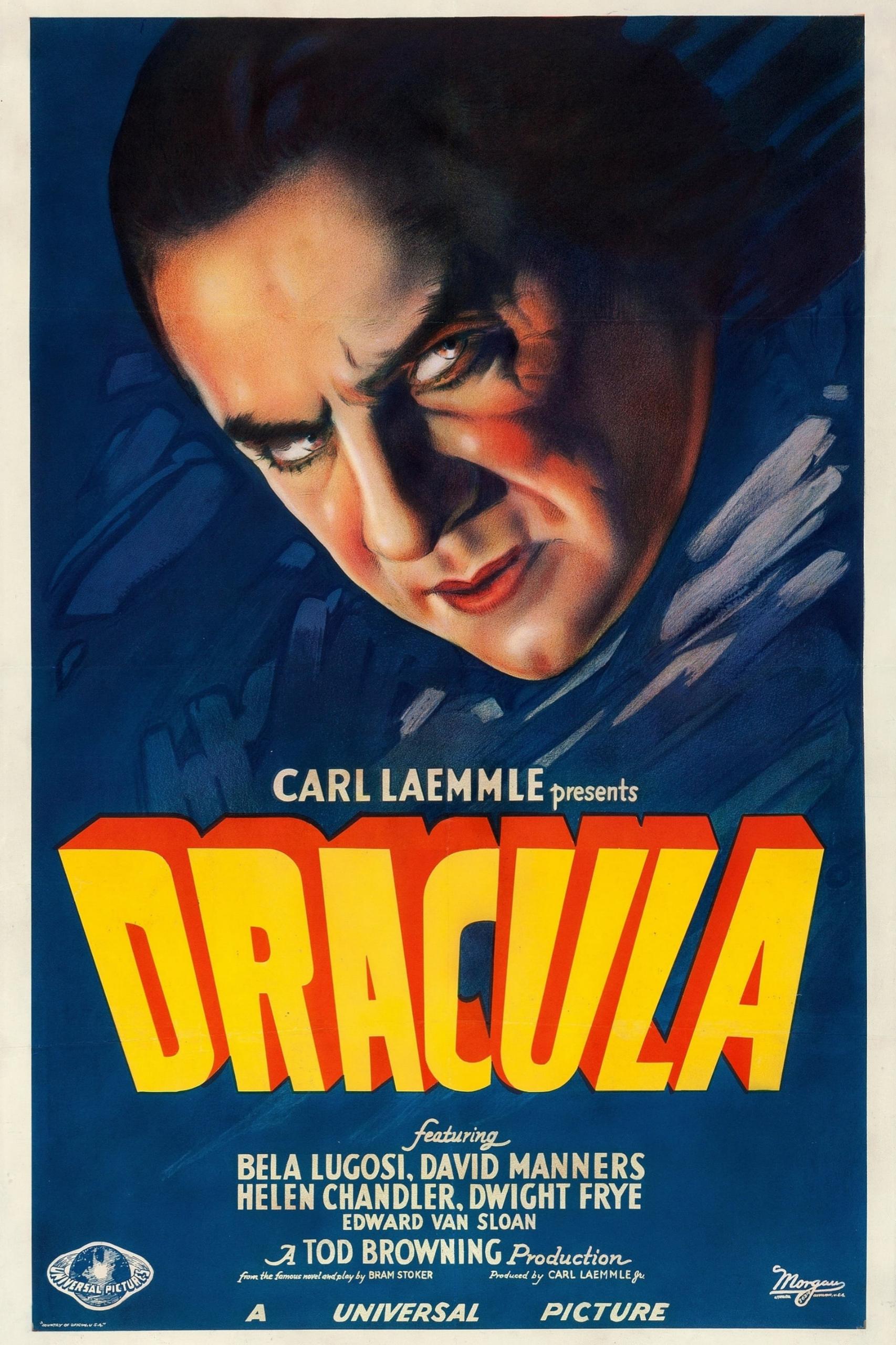
Dracula (1931)

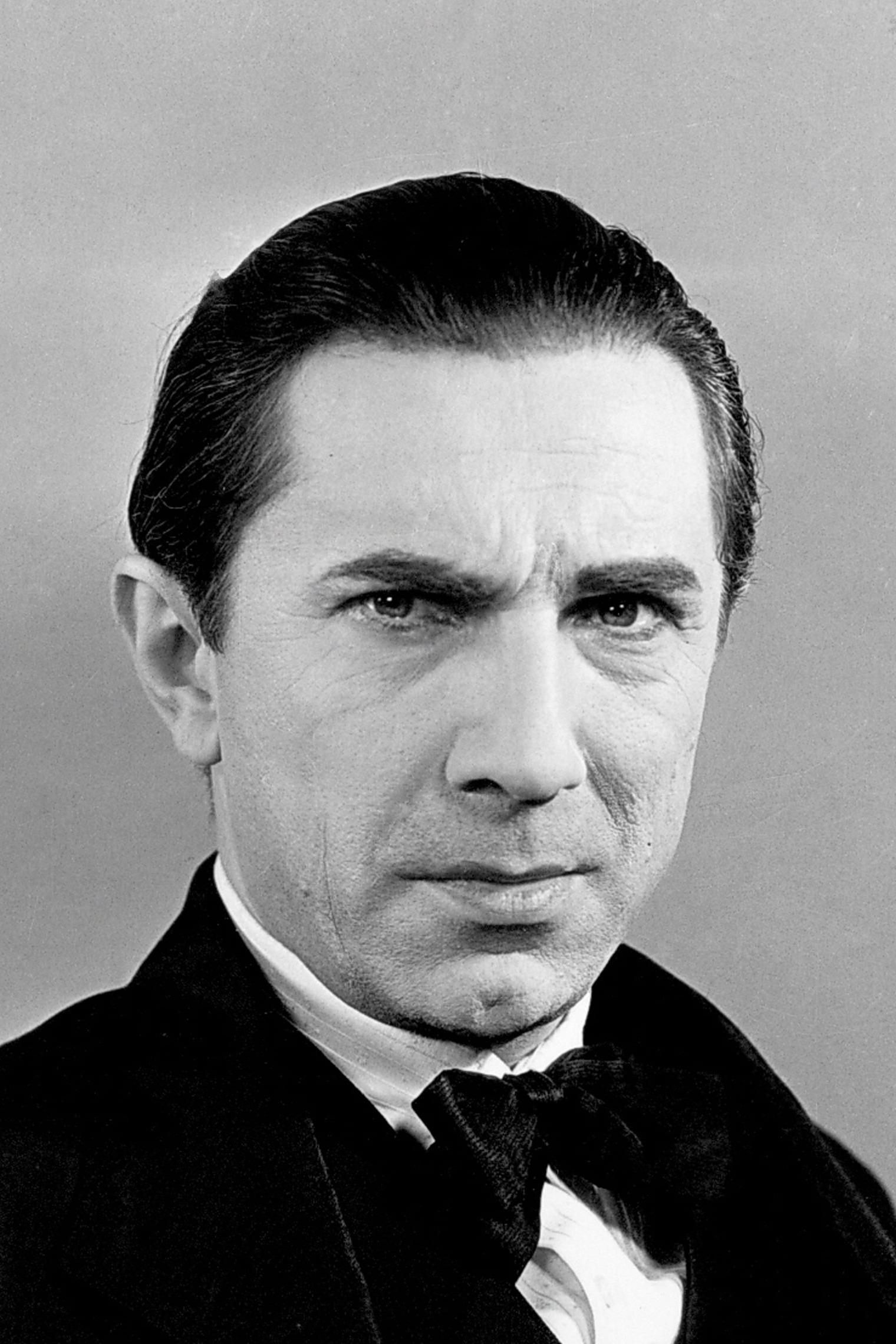
"I am....Drac-u-la. I bid you velcome." Thus does Bela Lugosi declare his presence in the 1931 screen version of Bram Stoker's Dracula. Director Tod Browning invests most of his mood and atmosphere in the first two reels, which were based on the original Stoker novel; the rest of the film is a more stagebound translation of the popular stage play by John Balderston and Hamilton Deane. Even so, the electric tension between the elegant Dracula and the vampire hunter Professor Van Helsing (Edward Van Sloan) works as well on the screen as it did on the stage. And it's hard to forget such moments as the lustful gleam in the eyes of Mina Harker (Helen Chandler) as she succumbs to the will of Dracula, or the omnipresent insane giggle of the fly-eating Renfield (Dwight Frye). Despite the static nature of the final scenes, Dracula is a classic among horror films, with Bela Lugosi giving the performance of a lifetime as the erudite Count (both Lugosi and co-star Frye would forever after be typecast as a result of this film, which had unfortunate consequences for both men's careers). Compare this Dracula to the simultaneously filmed Spanish-language version, which makes up for the absence of Lugosi with a stronger sense of visual dynamics in the lengthy dialogue sequences. In 1999, a special rerelease of Dracula was prepared featuring a new musical score written by Philip Glass and performed by The Kronos Quartet.
The story of the strangest passion the world has ever known!
Count Dracula: I am Dracula. I bid you welcome.
Chatham Historic Dockyard, Chatham, Kent, England, UK
Universal Studios - 100 Universal City Plaza, Universal City, California, USA
(studio)
Vasquez Rocks Natural Area Park - 10700 W. Escondido Canyon Rd., Agua Dulce, California, USA
(opening sequence - Renfield's coach)
Whitby, North Yorkshire, England, UK
Universal Studios commissioned a new musical score from composer Philip Glass. It premiered at The Brooklyn Academy of Music on 26 October 1999.
When Universal purchased the rights to the 1927 Broadway play, Lon Chaney was considered for the title role. However, Chaney died on August 26, 1930, and the role went to Bela Lugosi.
A Spanish-language version, Dr?cula (1931/I), was filmed at night on the same set at the same time, with Spanish-speaking actors.
Cinematographer Karl Freund achieved the effect of Dracula's hypnotic stare by aiming two pencil-spot-lights into actor Bela Lugosi's eyes.
The Royal Albert Hall sequence of the movie was filmed on the same stage where The Phantom of the Opera (1925) starring Lon Chaney had been filmed.
The large, expansive sets built for the Transylvania castle and Carfax Abbey sequences remained standing after filming was completed, and were used by Universal Pictures for many other movies for over a decade.
Among the other actors mentioned as possible candidates for the role of Count Dracula were John Wray, Paul Muni, Conrad Veidt, Chester Morris, and William Courtenay.
Bela Lugosi was so desperate to repeat his stage success and play the Count Dracula role for the film version, that he agreed to a contract paying him $500 per week for a seven week shooting schedule, an insultingly small amount even during the days of the Depression.
The spider webs in Dracula's castle were created by shooting rubber cement from a rotary gun.
Bela Lugosi played the role of Dracula on Broadway in 1927 before touring the country with the show. The American performance of the British stage actor Hamilton Deane's adaptation of the book was a smashing success. Soon after the play began touring Universal started to express interest in the script.
Due to studio demands to cut costs, the film was shot in sequence.
When this film was re-released after the Production Code was strictly enforced in 1934, several deletions were ordered made to the soundtrack. The deletions include Renfield's scream as he is being killed and Dracula's moan as the stake is driven through his heart. These deletions have been restored.
As was done for Frankenstein (1931), the original release featured a prologue introduction with Edward Van Sloan. This prologue was removed for the 1936 re-release. This footage is now assumed to be lost.
After the death of Lon Chaney, one of the first actors considered for the title role was Ian Keith.
While it is rumored that Bela Lugosi, could not speak English very well, and had to learn his lines phonetically, this is not true. Lugosi was speaking English as well as he ever would by the time this was filmed.
The studio did not want the scene where Dracula attacks Renfield to be filmed due to the perceived gay subtext of the situation. A memo was sent to the director stating "Dracula is only to attack women".
There was no real musical soundtrack in the film because it was believed that, with sound being such a recent innovation in films, the audience would not accept hearing music in a scene if there was no explanation for it being there (e.g., the orchestra playing off camera when Dracula meets Mina at the theatre).
Several famous elements often associated with Dracula are not visible in this film. At no point does Dracula display fangs. Also, the famous vampire bite mark on the neck is never shown either (though it is visible in the Spanish version).
Bela Lugosi played Dracula only once more on screen, in the comedy Bud Abbott Lou Costello Meet Frankenstein (1948).
This Universal production became the most famous and successful film to pair David Manners with Helen Chandler. The pair had made two films at Warner Brothers/First National and one at Fox.
The peasants inside the inn are praying The Lord's Prayer in Hungarian.
Bette Davis (who had a contract at Universal at the time) was considered to play the part of Mina Harker. However, Universal head Carl Laemmle Jr. didn't think too highly of her sex appeal.
The opening music to this film is from Act 2 of Swan Lake.
In the scene where Dracula and Renfield are traveling to London by boat, the footage shown is borrowed from a Universal silent film called The Storm Breaker (1925). Silent films were projected at a different frames-per-second speed from that later adopted for sound films, accounting for the jerky movements and quicker-than-normal action of these shots.
In the first scene, the young woman reading from the tourist book was played by Carla Laemmle, niece of Carl Laemmle, founder and head of Universal Pictures.
When Carl Laemmle moved Universal to California in 1914, a version of "Dracula" was one of the first projects being considered. It was over fifteen years before this version was produced.
The movie's line "Listen to them. Children of the night. What music they make." was voted as the #83 movie quote by the American Film Institute (out of 100).
When Bela Lugosi died in 1956, he was buried wearing the black silk cape he wore for this film.
Universal's original plan was to make a big-budget adaptation of "Dracula" that would strictly adhere to the Bram Stoker novel. However, after the stock market crash of 1929 and the beginning of the Great Depression, Universal chose not to risk an investment on such a sprawling film. Instead, it adapted the much less expensive Hamilton Deane stage play.
Universal acquired the film rights to "Dracula" from Bram Stoker's widow and the play's writer Hamilton Deane for $40,000.
Before he was cast as Count Dracula, Bela Lugosi acted as an unpaid intermediary for Universal Pictures in negotiating with the widow of author Bram Stoker in an attempt to persuade her to lower her asking price for the filming rights to the Dracula property. After two months of negotiations, Mrs. Stoker reportedly lowered her price from $200,000 to $60,000. This, however, further demonstrated to Universal how desperate Lugosi was to repeat his stage success as Count Dracula and secure the film role for himself.
Apparently morose over the loss of friend and collaborator Lon Chaney and in the midst of severe alcoholism, the normally meticulous Tod Browning was said to have been sullen and unprofessional during the shoot. Among his actions were to leave set, leaving cinematographer Karl Freund to direct scenes. He would also recklessly tear pages out of the script if he felt them to be redundant.
The original Broadway production of "Dracula" starring Bela Lugosi opened at the Fulton Theater on October 5, 1927 and ran for 261 performances. Also in the original cast was Edward Van Sloan as Van Helsing.
Although he lived for 67 years after the film was released, David Manners (John Harker) claimed he never watched it.
Edward Van Sloan and Dwight Frye also appeared in the horror classic Frankenstein (1931). They are the only 2 actors to have appeared in both films.
Continuity
When Dracula is asking if Renfield has kept his trip to Transylvania secret, Renfield's valise jumps from Dracula's hands to the table. This is the result of a cut line.
When the innkeeper tells Renfield about Dracula, he holds his pipe in his left hand, except for one shot when it is in his right.
In the scene where Count Dracula first meets Dr. Van Helsing and companions, Mina has covered her neck with a scarf to conceal the vampire's bite-marks (which Dr. Seward and Dr. Van Helsing examine). However, in all subsequent scenes, Mina (Helen Chandler) shows no marks or scars anywhere on her neck or throat.
When Dracula and Renfield first enter the castle bedroom, the door is closing by itself, hinged on the right side; after a scene shift the door is seen still closing (when it should have been shut by now), but is now hinged on the opposite side.
During shots of the ship sailing in route to London, the ship is experiencing very rough, rolling, and stormy seas, including both torrential rain and waves washing across the decks, and yet, when shots of Dracula are shown as he comes up from the lower decks, show a stable and completely dry setting.
Factual errors
On main title, Carl Laemmle's studio affiliation is listed as "Presient"
Joan Standing is wrongly credited as a maid, but she was actually playing the part of Briggs (a nurse). Moon Carroll played the uncredited part as a maid. She is the one who faints when Renfield is laughing very scarily.
The barking and howling of the wolves is clearly audible as a man imitating them. There is also an acoustic reverberation to these vocals that tells the audience the recordings were done in a sound studio and not in the open air as Dracula's mountain castle would be.
When Renfield joins Dracula at the top of the stairs you can hear their footsteps clunking on a wooden set instead of the massive stone slabs they are supposed to be made of.
The people at the inn seem to be speaking Hungarian, but the region has never been part of Hungary; it's Romanian, and they would have been speaking the local dialect of Romanian.
Incorrectly regarded as goofs
In the novel, the character's name is Jonathan which may be shortened to Jon. But it is never shortened to John (with an h), because that is a difference name directly from the Bible (John the Baptist or John the Evangelist). Yet the opening title sequence lists his name as John Harker, not Jonathan or Jon Harker. The movie is rather based on the stage play by John L. Balderstone and Hamilton Deane than the book. Balderstone, who adapted the original adaption by Deane for its Broadway premiere, shortened and changed certain names such as Jonathan Harker's.
Revealing mistakes
In the scene where Van Helsing is attempting to catch Dracula's lack of reflection in a mirror, there are visible chalk marks on the floor showing Bela Lugosi where to stand for the shot.
When the vampire bat hovers outside Lucy's window and flaps its wings, you can see the wires attached to the bat, pulling it up and down and causing the wings to flap.
The London girl selling flowers who is attacked by Count Dracula before he enters the concert hall can be seen moving while the policeman is blowing his whistle, even though she is supposedly dead.
Bats have wires visible.
The chemical apparatus on Van Helsing's desk includes a condenser with a flask and a retort connected to its cooling jacket; that is a nonsensical arrangement.
Miscellaneous
As the initial meeting between Renfield and Dracula is ending, Dracula says "I'll leave you ". It's doubtful that a Hungarian Count of the era would use the contracted form of "I will ".
Carl Laemmle's studio title is misspelled in the title screen. It says Presient and not President.
In the initial bedroom scene at the castle, Dracula takes Renfield's hat, coat and cane and walks to the left of the fireplace and out the side door. This is the same door the Vampire Women enter from a few moments later and clearly is an exterior door. No explanation is given as to why Dracula takes Renfield's things outside.
Dracula is never shown actually exiting his coffin, although he is seen opening it and starting to get up. In a continuous shot, the camera moves away to focus on the window for a moment, and when it returns, Dracula is standing next to his coffin.
Crew or equipment visible
Pieces of cardboard placed on the lamps in bedrooms, apparently to shield lights for close-ups. It may have been intentional, but no one in the cast ever notices.
Part of a lit lamp can be seen hidden behind a chair as Dracula walks by it.
Errors in geography
Dr. Seward's sanitarium is said to be both "near London" and "in Whitby." Whitby, on the Yorkshire coast in northern England, is nowhere near London.
In the first shots of Dracula's castle, a Virginia opossum, native to North America, is seen in a castle in Transylvania.
Armadillos (native to the Americas) are seen in Dracula's castle in Transylvania.
At one point, Dracula gets out of his Carfax Abbey coffin. In the background can be seen the great hall standing set for London After Midnight. A still exists of Lugosi carrying Chandler down these stairs and the scene is in the Spanish version. However, later his coffin is in the basement.
Character error
When Dracula's brides converge on Renfield after he has passed out, Dracula enters and motions them away. As they are walking backwards, one bride steps on another bride's dress causing one bride to "catch" another. It is possible that she may have stepped on her own dress.
In Bram Stoker's novel, Jonathan Harker is the solicitor sent to arrange Count Dracula's arrival to England, not Renfield. In the book, Renfield is already a madman in Dr. Seward's sanitarium, not even having met Dracula.
Dr. Seward threatens to have Renfield confined in a "strait-jacket". Although this is probably a translation convention for the American audience rather than an unintentional slip, a British doctor would say "strait-waistcoat," which is what he says in Bram Stoker's novel and other filmed enactions of this scene.
Reinfeld (Dwight Frye) faints and the three women vampires start to walk towards him. Dracula (Bela Lugosi) enters and waves his arm at them. As the three women walk backwards, one woman on the right steps on the woman in the middle dress.
Dracula sleeps on a bed of his own Transylvanian dirt. But whenever he rises, he is perfectly groomed, and his silk cape has nary as speck of dirt on it.