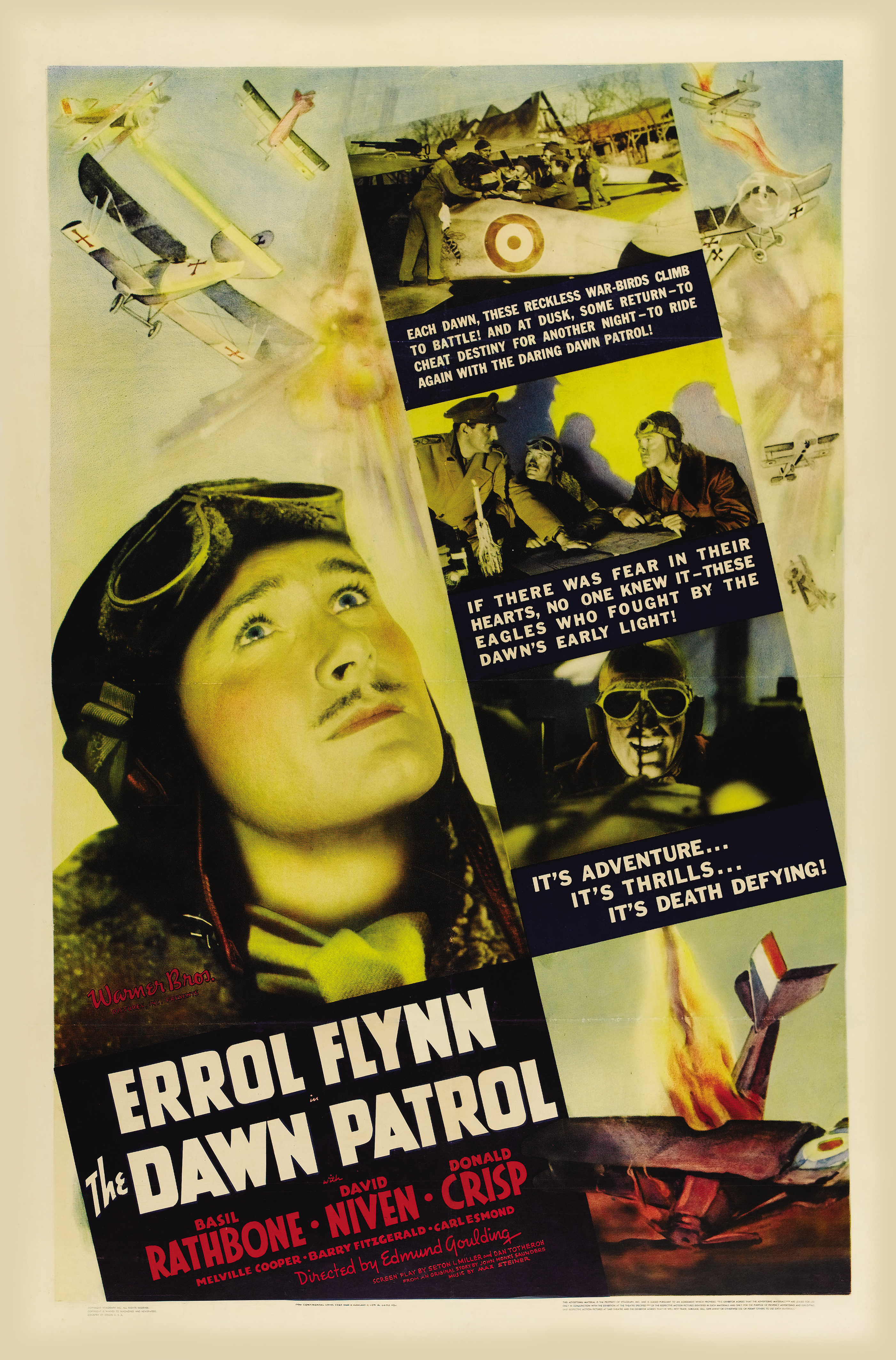
The Dawn Patrol (1938)

In 1915 France, Major Brand commands the 39th Squadron of the Royal Flying Corps. The young airmen go up in bullet-riddled "crates" and the casualty rate is appalling, but Brand can't make the "brass hats" at headquarters see reason. Insubordinate air ace Captain Courtney is another thorn in Brand's side...but finds the smile wiped from his face when he rises to command the squadron himself. Everyone keeps a stiff upper lip.
They roared through the dawn . . . with death on their wings !
Capt. Courtney: Man is a savage animal, who, periodically to relieve his nervous tension, tries to destroy himself.
Calabasas, California, USA
Palmdale, California, USA
(additional 2nd Unit battlefield scenes)
Warner Brothers Burbank Studios - 4000 Warner Boulevard, Burbank, California, USA
(Studio)
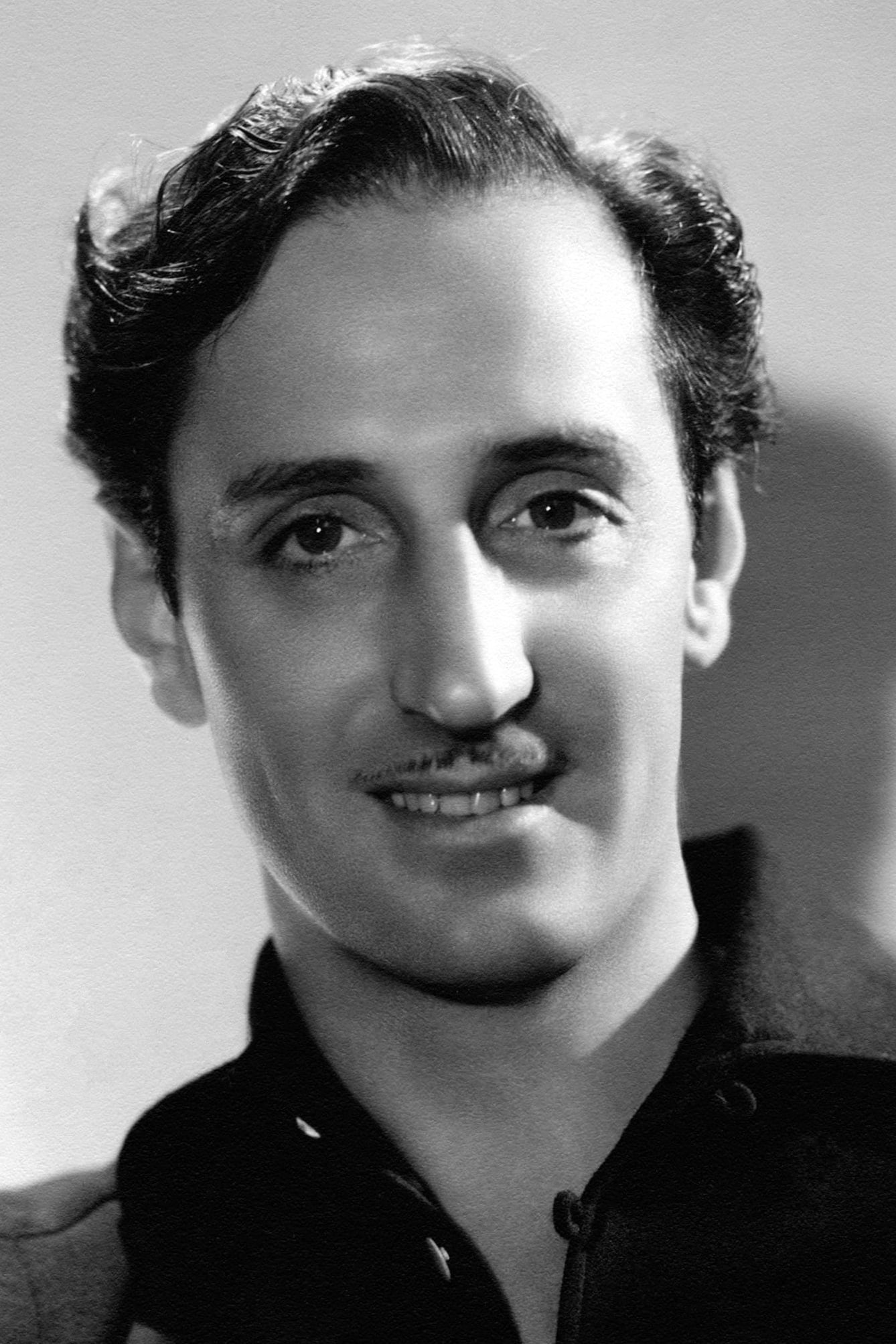
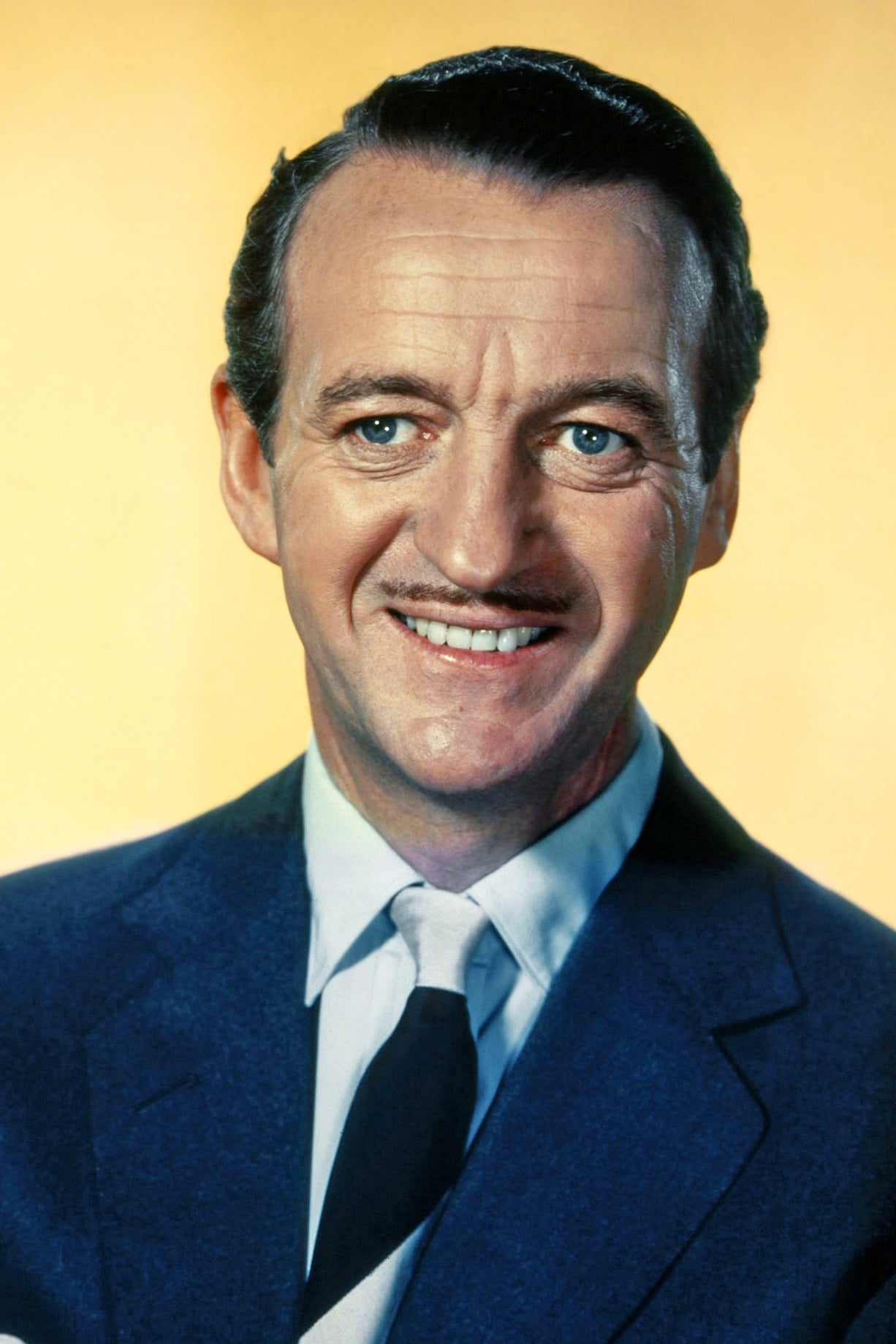
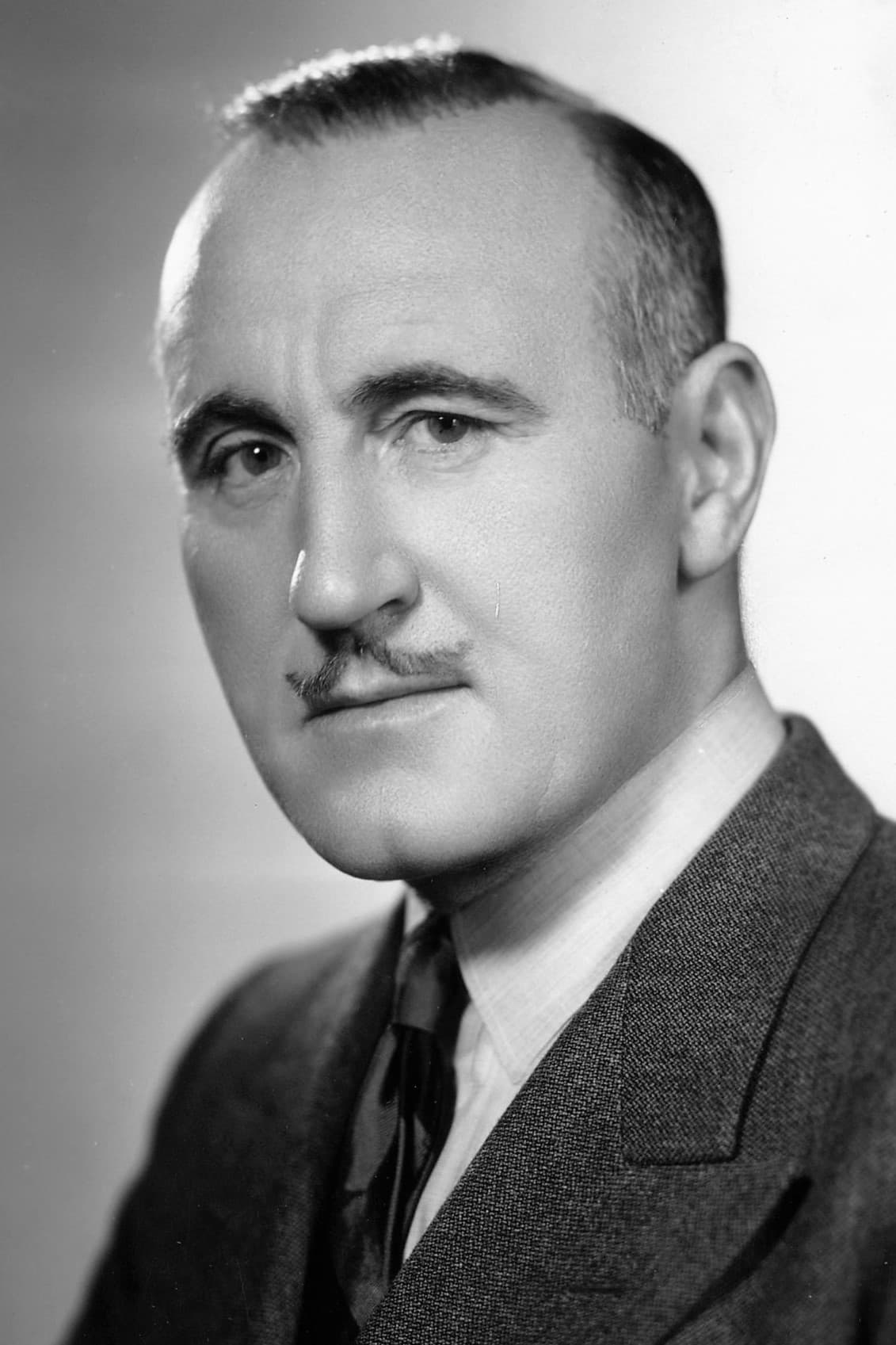
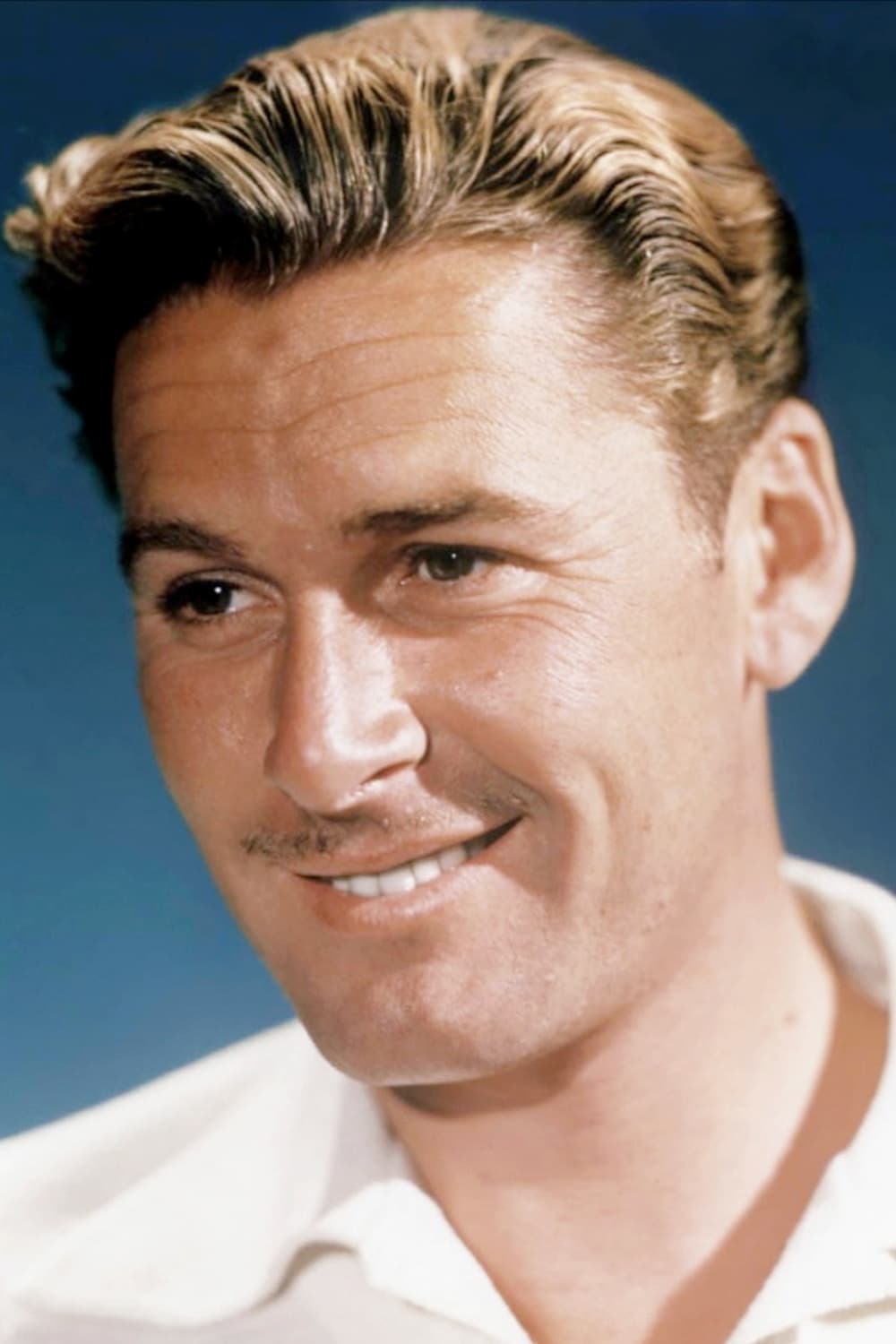
At the time this movie was filmed, Errol Flynn and David Niven shared a rented house at Malibu, which they named "Cirrhosis-by-the-Sea" because of all the hard drinking and sex they were having with several women.
The filmmakers needed several shots of the planes taking off and landing. They assembled a squadron of 17 vintage WW1 aircraft, most of them Nieuports. Flying them proved just as hazardous as in WW1. By the time filming ended, stunt flyers had crashed 15 of them.
Most of the aerial footage comes from Warner Bros.' previous version, The Dawn Patrol (1930).
Courtney (Errol Flynn) says that his father was a professor of biology at Queen's. In fact, Errol Flynn's father, Theodore Thomson Flynn, was a professor of biology, first at the University of Tasmania and later at Queen's University in Belfast, Northern Ireland. In Tasmania he did pioneering work on the declining population of the thylacine, or "Tasmanian wolf", which went extinct in 1936.
One of the Nieuports used in the movie is now on display at the Army Aviation Museum at Fort Rucker Alabama.
Continuity
The amount of oil and dirt on Courtney's face changes several times between scenes. The most obvious is when he goes up stairs to console another pilot who has lost a friend. As he goes up his face is slightly dirty, as he enters the room it is noticeably dirtier and when he comes back down it is much cleaner.
When Captain Courtney is rescued, he jumps on the wing and hangs onto the strut. When the aircraft takes off, not only was a dummy used much further forward on the wing than Captain Courtney was, but it is an entirely different plane - a two-seat trainer.
(at around 1 min) Phipps is writing a letter of condolence to the mother of a recruit who has been killed in action. As he stops writing to talk with Major Brand, he switches his pen from his right hand to his left hand and removes his glasses with his right hand. In the next shot, his pen is back in his right hand and his glasses are in his left hand.
In the beginning, the planes shown landing and the planes that taxi up to the hangers are different.
Factual errors
Almost all the flying aircraft that don't crash are the Travel Air 4000, which was produced in USA from 1926 to 1929, so could not have been in use in WW1. It was produced for private flying and was never a military aircraft. Many of the aircraft seen on the ground are the Nieuport 28 - which was a WW1 fighter, but was French (and was not flown by the British) and did not fly until 1917 (the film is set in 1915). (Most/all scenes of actual flying and many aircraft scenes on the ground are lifted from the 1930 film.)
Miscellaneous
During the final dog fight when the aircraft is shown nose up, you can see a large, modern (for 1938) airport under them. It's visible in two shots.
When Courtney and Scotty are approaching the enemy airfield, one can see Scotty's plane superimposed over Courtney. Obviously, the film of the two is stacked and re-photographed to create the composite.
Anachronisms
The opening shot identifies the year as 1915. From the first, the song played over and over on the phonograph is "Poor Butterfly." Sources seem to agree that this song was not published until 1916, and not recorded until later still.